
Welding Niobium: Best Practices, Challenges, and Industrial Applications
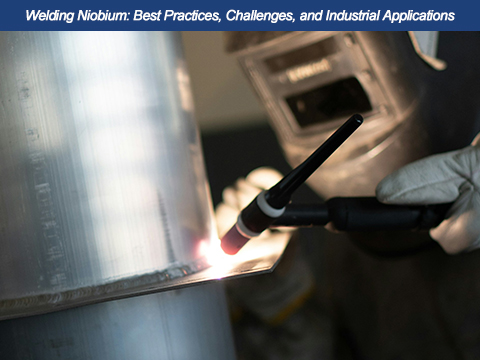
| Key Factor | What You Need to Know |
|---|---|
| Main risk | Oxidation and contamination |
| Best methods | TIG (GTAW), Electron Beam |
| Shielding gas | High-purity argon or argon-helium |
| Critical rule | Keep weld fully shielded during welding and cooling |
| Typical industries | Aerospace, medical, electronics, chemical |
What is welding niobium?
Welding niobium means joining niobium metal or niobium-containing materials using controlled heat and strong inert shielding to prevent oxidation and contamination.
Most important rule:
The most important rule in welding niobium is to keep the weld zone fully shielded from air during welding and cooling.
Best methods:
Electron beam welding and inert-gas-shielded TIG are the most common and reliable methods for welding niobium.
What Is Niobium and Why Is It Used in Welding?
Niobium is a high-performance metal known for its strength, stability, and resistance to heat and corrosion. These properties make it valuable in many industries that require reliable materials under extreme conditions. When it comes to welding niobium, these same properties create both opportunities and challenges.
One key reason niobium is used in welding applications is its high melting point. This allows it to perform well in high-temperature environments without losing strength. In addition, niobium offers excellent corrosion resistance, especially in chemical processing environments where aggressive fluids are present. Another important feature is its biocompatibility, which makes it suitable for medical devices and implants.
Niobium is also used because of its stable mechanical performance. It maintains its structure and does not easily deform when exposed to heat. This makes it useful in precision-engineered parts where dimensional accuracy is important.
Compared to other metals, niobium provides a strong balance of durability and performance. For example:
| Property | Niobium | Stainless Steel | Titanium |
|---|---|---|---|
| Melting point | Very high | Moderate | High |
| Corrosion resistance | Excellent | Good | Excellent |
| Weld sensitivity | High | Moderate | Moderate |
Because of these characteristics, welding niobium is widely used in industries such as aerospace, electronics, medical, and chemical processing. Engineers and manufacturers choose niobium when failure is not an option and long-term reliability is required.
What Makes Welding Niobium Difficult?
Welding niobium is not a simple process. Although the material has many advantages, it also presents several challenges that must be carefully managed. Understanding these challenges is the first step toward achieving high-quality welds.
Oxidation Risk
Niobium reacts quickly with oxygen when exposed to air at high temperatures. During welding niobium, this reaction can cause discoloration, brittleness, and reduced strength. Even a small amount of oxygen can damage the weld.
Sensitivity to Contamination
Contamination is another major issue in welding niobium. Oil, grease, dust, or even fingerprints can introduce impurities into the weld zone. These impurities can weaken the joint and cause defects such as porosity or cracking.
Shielding Requirements
Because of its reactivity, welding niobium requires strong shielding from the surrounding atmosphere. Without proper shielding gas coverage, the weld can fail. This is why inert gases like argon are essential.
Heat Control Issues
Controlling heat input is also critical. Too much heat can damage the material, while too little heat can result in weak fusion. Proper heat control ensures that the weld is strong and consistent.
Main risks when welding niobium: oxidation, contamination, brittle joints, poor shielding, and improper joint preparation.
To overcome these challenges, welders must use precise techniques, maintain a clean environment, and carefully control every step of the process.
Best Welding Methods for Niobium

Choosing the right method is essential for successful welding niobium. Different welding techniques offer different advantages depending on the application, material thickness, and required precision.
| Method | Best Use | Advantages | Limitations | Typical Use |
|---|---|---|---|---|
| Electron Beam Welding | Precision parts | Very clean, low contamination | High cost, vacuum needed | Aerospace components |
| TIG (GTAW) | General fabrication | Good control, widely available | Requires strong shielding | Tubes, sheets |
| Plasma Arc Welding | Thin materials | Stable arc, precise | Equipment complexity | Electronics |
| Resistance Welding | Small parts | Fast process | Limited to certain shapes | Small assemblies |
| Diffusion Welding | High integrity joints | No melting, strong bond | Slow process | Advanced systems |
| Laser Welding | Thin sheets | High speed, precise | High equipment cost | Precision parts |
| DC-GTAW Welding | Thick materials | Deep penetration, faster speed | Higher skill required | Heavy sections |
Electron Beam Welding (EBW)
Electron beam welding is one of the most advanced methods used in welding niobium. It uses a focused beam of high-energy electrons to create a precise and deep weld. Because the process is performed in a vacuum environment, it eliminates the risk of oxidation and contamination.
This method is ideal for high-performance applications where weld quality must be extremely clean and consistent. It is widely used in aerospace and research industries. However, the equipment is expensive, and the process requires specialized facilities. For this reason, electron beam welding is typically chosen for critical components rather than general fabrication.
TIG Welding (GTAW)
TIG welding, also known as Gas Tungsten Arc Welding, is one of the most commonly used methods for welding niobium. It offers excellent control over heat input and weld quality, making it suitable for a wide range of applications.
This method uses a tungsten electrode and an inert shielding gas, usually argon, to protect the weld from contamination. TIG welding is flexible and relatively easy to control, which makes it popular in fabrication shops.
However, strong shielding is essential when welding niobium with TIG. Without proper gas coverage, oxidation can occur quickly. When done correctly, TIG welding provides clean, strong, and reliable welds for niobium sheets, tubes, and thin components.
Plasma Arc Welding
Plasma arc welding is similar to TIG welding but uses a more concentrated arc. This allows for better precision and stability, especially when working with thin materials.
In welding niobium, plasma arc welding can produce high-quality welds with consistent results. It is often used in applications that require fine control and minimal distortion, such as electronics or precision components.
The main limitation is the complexity of the equipment. It requires skilled operators and proper setup to achieve the best results. Despite this, it is a valuable option for specialized applications.
Resistance Welding
Resistance welding is commonly used for small parts and assemblies. It works by applying pressure and passing an electrical current through the material to generate heat and form a weld.
For welding niobium, this method can be efficient and fast, especially in high-volume production. It is often used for joining thin components or small-scale parts.
However, resistance welding is limited in terms of the shapes and thicknesses it can handle. It is not suitable for large or complex structures. Proper surface preparation is also important to ensure consistent results.
Diffusion Welding
Diffusion welding is a solid-state process that joins materials without melting them. Instead, it uses heat and pressure over time to bond the materials at the atomic level.
This method is highly effective for welding niobium in applications where joint integrity is critical. Because there is no melting, the risk of defects such as porosity or cracking is reduced.
Diffusion welding is often used in advanced systems, including aerospace and research equipment. However, it is a slow process and requires precise control, which can increase production time and cost.
Laser Welding
Laser welding uses a high-energy laser beam to fuse niobium and other metals. The energy density of the laser is very high, which allows for fast welding speeds and precise heat control.
In welding niobium, laser welding is especially suitable for thin sheets and small components. It produces narrow weld zones and minimizes distortion, which is important for precision parts.
However, this method requires advanced equipment and careful setup. The cost is relatively high, and the application range is somewhat limited. Despite these challenges, laser welding is a strong option for high-precision and automated production environments.
DC-GTAW Welding (Direct Current TIG)
DC-GTAW welding is a variation of TIG welding that uses direct current. It is particularly suitable for welding thicker niobium materials because it provides deeper weld penetration and faster welding speeds.
Compared to standard TIG welding, DC-GTAW offers improved efficiency when working with heavy sections. This makes it useful in applications where strength and depth are important.
However, the process is more difficult to control and requires a higher level of skill. Operators must carefully manage heat input and shielding to avoid defects. When performed correctly, DC-GTAW can deliver strong and reliable results in welding niobium.
Electron beam welding and TIG-based methods remain the most widely used approaches for welding niobium. However, newer techniques like laser welding and DC-GTAW provide additional options for specific applications. By selecting the right method, manufacturers can improve weld quality, reduce defects, and optimize production efficiency.
How to Prepare Niobium Before Welding
Preparation is one of the most important steps in welding niobium. Even the best welding method will fail if the material is not properly prepared. Cleanliness and handling play a major role in achieving strong and defect-free welds.
Here is a simple step-by-step checklist for preparing niobium:
- Clean the surface
Remove dirt, oil, and grease using appropriate cleaning agents.
- Remove oxide layer
Use mechanical or chemical methods to eliminate surface oxides.
- Avoid contamination
Do not touch the cleaned surface with bare hands. Use gloves.
- Use clean tools
Ensure all tools are free from contaminants and dedicated to clean work.
- Align and fit joints properly
Poor alignment can lead to weak welds.
- Set up shielding system
Prepare gas shielding before starting the welding process.
- Weld under protection
Begin welding immediately after preparation to minimize exposure.
To weld niobium correctly, clean the surface, remove oxide, avoid contamination, and weld under full inert gas shielding.
Proper preparation reduces the risk of defects and improves overall weld quality. For fabrication shops, following this checklist can significantly improve consistency and reduce rework.
Shielding Gas and Atmosphere Control
Shielding is the most critical factor in welding niobium. Without proper shielding, even a well-prepared weld will fail. Niobium must be protected not only during welding but also during the cooling phase.
High-purity argon is the most commonly used shielding gas. In some cases, an argon-helium mixture is used to improve heat transfer and arc stability. The choice depends on the application and welding method.
Another important aspect is full coverage shielding. This includes:
- Primary shielding from the torch
- Back shielding to protect the underside
- Trailing shielding to protect the cooling weld
Niobium must remain fully shielded from air during both welding and cooling to prevent oxidation.
If the weld is exposed to air too early, oxidation can occur immediately. This can lead to discoloration and reduced mechanical properties. In critical applications, chamber welding or vacuum environments may be used to ensure complete protection.
Effective atmosphere control is essential for achieving clean, strong, and reliable results in welding niobium.
Welding Niobium to Stainless Steel and Other Metals
In many advanced applications, niobium must be joined to other metals, such as stainless steel. This type of welding is more complex than welding similar materials.
Yes, niobium can be welded to stainless steel, but it requires precise control, strong shielding, and specialized methods.
The main challenge is the difference in material properties. Niobium and stainless steel have different melting points, thermal expansion rates, and chemical behaviors. These differences can cause stress, cracking, or weak joints.
To address these issues, engineers may use:
- Electron beam welding for precision control
- TIG welding with careful parameter adjustment
- Brazing or transition materials to reduce stress
In some cases, intermediate layers are used to improve compatibility between the two metals.
Welding niobium to dissimilar materials is often used in aerospace, medical devices, and specialized industrial equipment. Success depends on careful planning, testing, and process control.
Weldability of Niobium-Containing Alloys
Not all niobium applications involve pure metal. In many cases, niobium is added to other alloys, especially steels, to improve performance. This affects how the material behaves during welding.
Niobium is often used in microalloyed steels to refine grain structure. During welding, this can improve the properties of the heat-affected zone. A finer grain structure generally leads to better strength and toughness.
However, welding niobium-containing alloys still requires careful control. The presence of niobium can change how the material reacts to heat. If not managed properly, it can lead to uneven microstructures or reduced performance.
Research shows that niobium can improve toughness in welded structures by refining grains in the heat-affected zone.
Understanding these effects is important for engineers and manufacturers working with advanced materials. It allows them to optimize welding processes and achieve better results.
Common Welding Defects and How to Prevent Them
Even with proper techniques, defects can occur during welding niobium. Knowing how to identify and prevent these issues is essential for maintaining quality.
| Defect | Cause | Prevention | Inspection Clue |
|---|---|---|---|
| Oxidation | Exposure to air | Improve shielding | Discoloration |
| Porosity | Contamination | Clean surface | Small holes |
| Cracking | Thermal stress | Control heat | Visible cracks |
| Weak fusion | Low heat input | Adjust parameters | Weak joint |
Common defects in welding niobium include oxidation, porosity, and cracking, usually caused by poor shielding or contamination.
Regular inspection and testing help detect problems early. By following best practices, manufacturers can reduce defects and improve reliability.
Industrial Applications of Welded Niobium
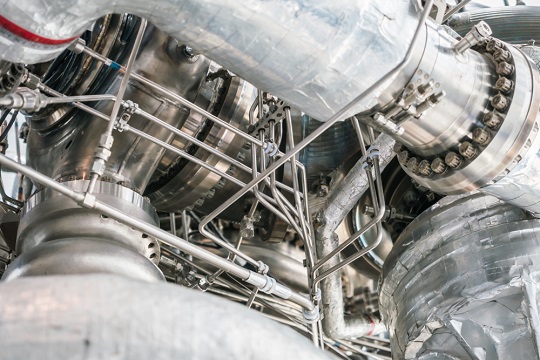
Welding niobium plays a critical role in many industries that require high performance and reliability. Its unique properties make it suitable for demanding environments.
| Industry | Niobium Product | Why It Matters | Example Use |
|---|---|---|---|
| Aerospace | Sheets, components | High temperature resistance | Engine parts |
| Medical | Implants, devices | Biocompatibility | Surgical implants |
| Electronics | Wires, thin parts | Stability | Semiconductor equipment |
| Chemical | Tubes, vessels | Corrosion resistance | Processing systems |
| Energy | Components | Durability | Research systems |
In aerospace, welding niobium is used for components that must withstand extreme heat. In medical applications, it is used for implants that require long-term stability. In electronics, it supports precise and reliable performance.
These applications show how important welding niobium is for modern industry. It enables innovation and supports critical technologies.
How to Choose the Right Niobium Supplier
Choosing the right supplier is just as important as choosing the right welding method. The quality of the material directly affects the success of welding niobium.
Key factors to consider include:
- Material purity for consistent performance
- Custom sizes and forms to meet specific needs
- Traceability and certification for quality assurance
- Reliable supply to avoid delays
- Technical support for application guidance
A good supplier helps reduce welding risks and improves overall production efficiency.
SIZEN LIMITED supplies high-purity niobium materials designed for demanding welding and fabrication applications. With a focus on quality, customization, and technical support, SIZEN LIMITED helps customers achieve reliable results in critical industries.
If you are working on a project that involves welding niobium, it is important to choose materials that match your exact specifications. Our experts are ready to review your drawings, material requirements, and application details to recommend the most suitable niobium products for your process.
Whether you need niobium sheets, rods, wires, tubes, or fully customized components, you can share your requirements with our team for fast, professional support. By working closely with our engineers, you can reduce welding risks, improve product quality, and speed up your production timeline. Send us your requirements today to get tailored solutions and a quick quote from our specialists.
FAQ – Welding Niobium
Can niobium be welded easily?
Welding niobium is not easy because it requires strict control of shielding and cleanliness. However, with the right methods and preparation, high-quality welds can be achieved.
What gas is used for welding niobium?
High-purity argon is the most common gas used in welding niobium. Argon-helium mixtures may also be used in some cases.
Can niobium be welded to stainless steel?
Yes, but it requires specialized techniques, strong shielding, and careful heat control.
What is the best method for welding niobium sheet?
TIG welding and electron beam welding are commonly used for welding niobium sheets due to their precision and control.
How do you prevent oxidation when welding niobium?
Use strong inert gas shielding and keep the weld protected from air during both welding and cooling.
Recent News
- Niobium vs Titanium: A Practical Material Selection Guide
- ASTM B708 Tantalum: Grades, Requirements & Buying Guide
- Niobium Ring Explained: Benefits, Applications and Sourcing Guide
- Tantalum Atomic Mass: What It Is and Why It Matters for Industrial Applications
- Niobium Density: How It Affects Material Performance and Design
- Tantalum Watch: Why This Rare Metal Is Becoming a Luxury Watchmaking Favorite
- Niobium Melting Point Explained: Properties, Comparisons, and Industrial Uses
- Tantalum Melting Point: Why 3,017°C Makes It One of the Most Valuable Refractory Metals
- Tantalum Density Explained: Why This Heavy Metal Matters
- Tantalum Hafnium Carbide (Ta₄HfC₅): The Ultra-High-Temperature Material Behind Advanced Engineering