
Tantalum Density Explained: Why This Heavy Metal Matters
Key Takeaways: Tantalum Density at a Glance
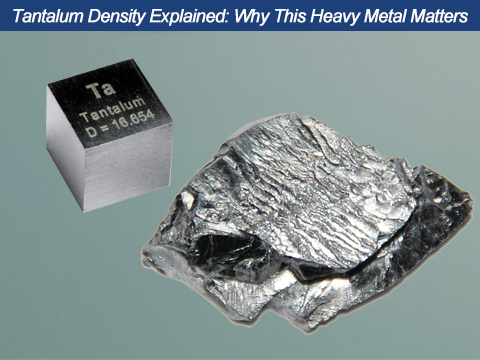
If you need a quick answer, the tantalum density is approximately 16.6 g/cm³ (16,600 kg/m³). This makes tantalum one of the densest metals commonly used in modern industry. It is significantly heavier than steel, copper, nickel, and lead, but still lighter than tungsten and platinum.
The high tantalum density is one reason why this metal performs so well in demanding environments. It offers excellent radiation shielding, outstanding stability at high temperatures, and exceptional resistance to corrosion. As a result, tantalum is widely used in aerospace, electronics, medical devices, and chemical processing equipment.
Quick Facts About Tantalum
| Property | Value |
|---|---|
| Density | 16.6 g/cm³ |
| Density | 16,600 kg/m³ |
| Atomic Number | 73 |
| Melting Point | 3,017°C |
| Boiling Point | 5,458°C |
| Corrosion Resistance | Excellent |
| Common Applications | Aerospace, Medical, Electronics, Chemical Processing |
Featured Snippet Answer
Tantalum density is approximately 16.6 g/cm³, making it one of the densest commercially used metals. Its high density contributes to excellent durability, radiation shielding capability, thermal stability, and performance in harsh industrial environments.
What Is Tantalum Density?
Simple Definition of Tantalum Density
Density measures how much mass is contained within a specific volume of material. In simple terms, it tells us how heavy a material is for its size.
The tantalum density is about 16.6 grams per cubic centimeter (g/cm³). This means a small piece of tantalum weighs much more than a similarly sized piece of aluminum, titanium, or steel.
Because of its high atomic weight and tightly packed crystal structure, tantalum naturally has a high density. This property is one of the key reasons engineers choose tantalum for critical applications where reliability and performance are essential.
Why Density Is an Important Material Property
Density affects many aspects of product design and manufacturing. Engineers often evaluate density before selecting a material because it influences:
- Component weight
- Structural performance
- Transportation costs
- Radiation shielding capability
- Mechanical stability
- Equipment handling
For example, in aerospace systems, weight is usually a concern. However, for shielding applications, a higher density can be an advantage because dense materials absorb radiation more effectively.
Similarly, in chemical processing equipment, the high tantalum density contributes to structural robustness and long-term durability in corrosive environments.
How Tantalum Density Is Measured
Density is typically expressed using two units:
- Grams per cubic centimeter (g/cm³)
- Kilograms per cubic meter (kg/m³)
The standard value for tantalum density is:
- 16.6 g/cm³
- 16,600 kg/m³
Laboratories determine density by measuring the mass and volume of a sample under controlled conditions. While minor variations may occur due to purity levels and manufacturing methods, the tantalum density remains very consistent across commercial grades.
Tantalum Density Compared with Other Metals
Understanding tantalum density becomes easier when comparing it with other engineering metals.
Density Comparison Table
| Material | Density (g/cm³) | Relative to Tantalum |
|---|---|---|
| Aluminum | 2.70 | Much lighter |
| Titanium | 4.51 | Much lighter |
| Stainless Steel | 7.90–8.00 | Lighter |
| Copper | 8.96 | Lighter |
| Nickel | 8.90 | Lighter |
| Lead | 11.34 | Lighter |
| Tantalum | 16.60 | Reference |
| Tungsten | 19.25 | Heavier |
| Platinum | 21.45 | Heavier |
The table clearly shows that tantalum density is much higher than many common engineering metals.
Is Tantalum Heavier Than Steel?
Yes. Tantalum is more than twice as dense as most stainless steels.
For example:
- Stainless steel: about 8.0 g/cm³
- Tantalum: about 16.6 g/cm³
This means a tantalum component of the same size will weigh roughly twice as much as a steel component.
Is Tantalum Heavier Than Lead?
Yes. Many people assume lead is one of the heaviest metals used in industry. However, tantalum density is significantly higher.
- Lead: 11.34 g/cm³
- Tantalum: 16.6 g/cm³
As a result, tantalum can provide excellent shielding performance while also offering far superior corrosion resistance.
Tantalum vs Tungsten Density
Tungsten is denser than tantalum.
- Tungsten: 19.25 g/cm³
- Tantalum: 16.6 g/cm³
However, engineers do not choose materials based solely on density. Tantalum offers better corrosion resistance and superior chemical stability in many aggressive environments. Therefore, tantalum is often selected when both high density and corrosion resistance are required.
Why Tantalum Density Matters in Engineering Applications
The high tantalum density is not simply a physical property listed on a datasheet. It directly affects how products perform in real-world applications.
Impact on Component Weight
Density determines the final weight of a part. Because tantalum is very dense, even small components can have substantial mass.
In some situations, this extra weight may be a disadvantage. However, in many industrial systems, the additional mass improves stability and vibration resistance.
For example, equipment operating under extreme mechanical conditions may benefit from the added weight and rigidity of tantalum components.
Impact on Radiation Shielding Performance
Dense materials absorb radiation more effectively than lighter materials.
Because tantalum density is so high, tantalum is frequently used in:
- Radiation shielding components
- Medical imaging systems
- Nuclear technology
- Aerospace electronics protection
Its combination of density and corrosion resistance makes it a valuable alternative to traditional shielding materials.
Impact on Thermal Stability
Tantalum has a melting point above 3,000°C. Combined with its high density, this gives the metal exceptional thermal performance.
Components made from tantalum maintain their integrity under extreme heat. This is especially important in aerospace, vacuum furnaces, and semiconductor manufacturing equipment.
Impact on Product Reliability
Reliability is often the most important requirement in high-value industrial systems.
The high tantalum density contributes to:
- Structural stability
- Reduced deformation
- Long service life
- Consistent performance
This helps minimize maintenance requirements and reduces downtime costs.
How Tantalum Density Influences Industrial Applications
Different industries take advantage of tantalum density in different ways.
Aerospace and Defense Applications

Although tantalum is not used for lightweight aircraft structures, it plays an important role in specialized aerospace applications.
Common examples include:
- Radiation shielding systems
- Satellite components
- Rocket propulsion equipment
- High-temperature assemblies
The high tantalum density helps protect sensitive electronics from radiation exposure while maintaining performance in extreme environments.
Electronics and Semiconductor Equipment

Tantalum is well known for its use in electronic components, especially tantalum capacitors.
In semiconductor manufacturing equipment, tantalum provides:
- Chemical resistance
- Thermal stability
- Long operating life
Its density is less important than its corrosion resistance in some electronics applications, but it still contributes to overall component robustness.
Medical Devices and Implants

The medical industry values tantalum because it is biocompatible and highly reliable.
Applications include:
- Bone implants
- Surgical instruments
- Medical imaging equipment
- Specialized device components
Although tantalum density makes implants heavier than titanium alternatives, its durability and biological compatibility often justify its use.
Chemical Processing Equipment
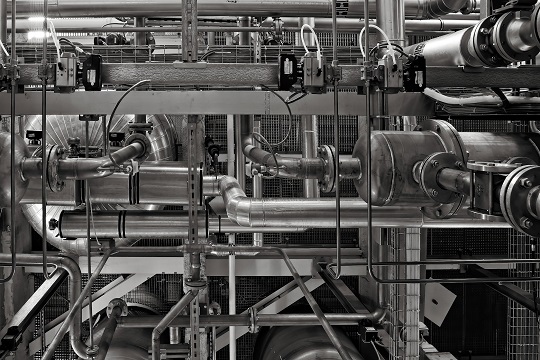
Chemical processing plants frequently handle highly corrosive acids and aggressive chemicals.
Tantalum is one of the most corrosion-resistant metals available. Equipment made from tantalum includes:
- Heat exchangers
- Reaction vessels
- Chemical piping components
- Acid processing systems
In these applications, the high tantalum density contributes to mechanical stability and long-term performance.
Tantalum Forms and Density Considerations
The impact of tantalum density varies depending on the product form being used.
Tantalum Sheet and Plate
Tantalum sheets and plates are commonly used for linings, shields, and fabricated equipment.
Because of the high tantalum density, large sheets can be significantly heavier than comparable titanium or stainless steel products. Engineers must consider support structures and handling requirements during installation.
Tantalum Rod and Bar
Tantalum rods and bars are often machined into specialized industrial components.
Their density provides:
- Good dimensional stability
- Resistance to vibration
- Reliable performance under stress
These benefits make tantalum rods attractive for demanding environments.
Tantalum Wire
Tantalum wire is used in electronics, medical devices, and high-temperature applications.
Even though wire diameters are small, the high tantalum density affects spool weight and handling characteristics during manufacturing.
Tantalum Powder
Powder products require additional density measurements beyond standard material density.
Important properties include:
- Apparent density
- Tap density
- Sintered density
These values influence powder flowability, compaction behavior, and final part quality.
For additive manufacturing, powder metallurgy, and hot isostatic pressing (HIP), density plays a major role in achieving high-performance finished components.
Custom Machined Tantalum Parts
Custom tantalum components are frequently designed for highly specialized applications.
Engineers must consider tantalum density when calculating:
- Final product weight
- Structural loads
- Transportation requirements
- Equipment balance
Proper planning helps optimize performance while controlling costs.
Advantages of High Tantalum Density
The high tantalum density creates several important benefits.
Excellent Radiation Shielding
Dense materials block radiation more effectively.
Tantalum provides strong shielding performance while also offering superior corrosion resistance compared with many traditional shielding materials.
Superior Stability in Harsh Environments
Tantalum remains stable in environments that quickly damage other metals.
Its density contributes to mechanical robustness in:
- High-temperature systems
- Vacuum environments
- Corrosive chemical processing
Long Service Life
Industrial equipment is expensive. Therefore, long service life is critical.
Tantalum components often remain operational for many years because they resist corrosion, wear, and thermal degradation.
Reliable Performance at High Temperatures
Many metals lose strength as temperatures rise.
Tantalum maintains excellent performance under extreme heat, making it valuable in advanced engineering systems.
Key Advantages Summary
- High radiation shielding effectiveness
- Outstanding corrosion resistance
- Exceptional thermal stability
- Long operational life
- Reliable performance in critical applications
Challenges of Using a Dense Metal
Despite its advantages, tantalum density also creates challenges.
Increased Component Weight
The most obvious drawback is weight.
A tantalum component may weigh significantly more than an equivalent titanium or aluminum part. This can increase system mass and complicate installation.
Higher Transportation Costs
Because tantalum is heavy, shipping costs can be higher, especially for large orders.
Manufacturers and procurement teams often include transportation costs when evaluating material options.
More Complex Machining Requirements
Tantalum's unique properties can make machining more demanding.
Manufacturers must carefully control machining parameters to achieve precise dimensions and high-quality surface finishes.
Material Cost Considerations
Tantalum is a specialty metal with a higher cost than many common engineering materials.
However, its performance benefits often reduce maintenance expenses and improve equipment lifespan, creating long-term value.
When Should You Choose Tantalum?
Choosing the right material requires balancing performance, cost, and design requirements.
Choose Tantalum If You Need
Tantalum is often the best choice when your application requires:
- Exceptional corrosion resistance
- High-temperature stability
- Radiation shielding
- Long service life
- Biocompatibility
- High reliability
In these situations, the benefits of tantalum density often outweigh concerns about additional weight.
Consider Alternatives If
Other materials may be more suitable when:
- Weight reduction is critical
- Budget is the primary concern
- Corrosion exposure is limited
- Performance requirements are less demanding
Titanium, stainless steel, or nickel alloys may offer sufficient performance at a lower cost.
Material Selection Checklist
Before selecting tantalum, ask:
✓ Will the part face corrosive chemicals?
✓ Is high-temperature performance required?
✓ Is radiation shielding important?
✓ Is long-term reliability critical?
✓ Can the design accommodate additional weight?
If the answer to most of these questions is yes, tantalum may be the ideal solution.
Frequently Asked Questions About Tantalum Density
What Is the Density of Tantalum in g/cm³?
The standard tantalum density is approximately 16.6 g/cm³.
What Is the Density of Tantalum in kg/m³?
The density of tantalum is approximately 16,600 kg/m³.
Is Tantalum Heavier Than Steel?
Yes. Tantalum is more than twice as dense as most stainless steels.
Is Tantalum Heavier Than Lead?
Yes. Tantalum density is significantly higher than lead density.
Why Is Tantalum So Dense?
Tantalum has a high atomic weight and a tightly packed atomic structure, resulting in high density.
Does Tantalum Density Affect Corrosion Resistance?
Density itself does not directly create corrosion resistance. However, tantalum's atomic structure contributes to both its high density and excellent chemical stability.
Does Tantalum Powder Have the Same Density as Solid Tantalum?
No. Powder materials have apparent density and tap density values that are lower than the theoretical density of fully dense solid tantalum.
Conclusion
Understanding tantalum density is essential when selecting materials for demanding industrial applications. At approximately 16.6 g/cm³, tantalum is one of the densest commercially used metals. It is heavier than steel, copper, nickel, and lead, yet slightly lighter than tungsten.
More importantly, tantalum density works together with other valuable properties. These include exceptional corrosion resistance and high-temperature stability. The material also offers excellent biocompatibility and a long service life. These strong characteristics make tantalum a trusted material across several industries. Key fields include aerospace, electronics, and medical devices. It is also highly relied upon in semiconductor equipment and chemical processing systems.
Tantalum's high density can increase both weight and cost. However, many engineers consider this tradeoff worthwhile. This is because of the exceptional performance and reliability the material delivers. You can find this metal in many standard shapes. Options include tantalum sheet, plate, rod, wire, and powder. Custom-machined components are also available. Understanding how tantalum density affects design and performance is crucial. Ultimately, this knowledge will help you make better material selection decisions.
At SIZEN LIMITED, we supply high-quality tantalum materials for both research and industrial production. Our product range includes tantalum sheets, plates, rods, bars, wires, tubes, powders, and custom-fabricated components manufactured to meet demanding specifications. With extensive manufacturing experience and strict quality control, we help customers find the right tantalum solution for their application.
If you are evaluating tantalum for aerospace, chemical processing, electronics, medical, or other high-performance applications, our team is ready to assist. Contact SIZEN LIMITED today to discuss your project requirements, request technical support, or obtain a competitive quote for standard and custom tantalum products. We are committed to providing reliable materials, flexible manufacturing capabilities, and responsive service to customers worldwide.
Recent News
- Niobium vs Titanium: A Practical Material Selection Guide
- ASTM B708 Tantalum: Grades, Requirements & Buying Guide
- Niobium Ring Explained: Benefits, Applications and Sourcing Guide
- Tantalum Atomic Mass: What It Is and Why It Matters for Industrial Applications
- Niobium Density: How It Affects Material Performance and Design
- Tantalum Watch: Why This Rare Metal Is Becoming a Luxury Watchmaking Favorite
- Niobium Melting Point Explained: Properties, Comparisons, and Industrial Uses
- Tantalum Melting Point: Why 3,017°C Makes It One of the Most Valuable Refractory Metals
- Tantalum Density Explained: Why This Heavy Metal Matters
- Tantalum Hafnium Carbide (Ta₄HfC₅): The Ultra-High-Temperature Material Behind Advanced Engineering