
ASTM B708 Tantalum: Grades, Requirements & Buying Guide
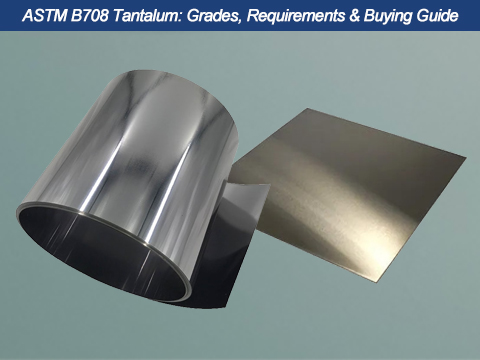
ASTM B708 is the ASTM specification for unalloyed and alloyed tantalum plate, sheet, and strip. The specification defines covered material grades and key technical requirements. These include chemical composition, mechanical properties, and manufacturing rules. It also outlines testing standards and delivery conditions. ASTM B708 gives engineers and purchasing teams a clear framework. It helps them specify tantalum for demanding applications.
| Item | Key information |
|---|---|
| Standard | ASTM B708 |
| Material | Tantalum and tantalum alloys |
| Product forms | Plate, sheet, and strip |
| Main grades | R05200, R05400, R05252, R05255, R05240 |
| Key buying concerns | Grade, dimensions, condition, testing, certification |
| Typical applications | Chemical processing, aerospace, medical, electronics, research |
What Is ASTM B708?
ASTM B708 is a material specification for tantalum flat products. It covers tantalum and tantalum-alloy plate, sheet, and strip. In practical terms, it helps buyers and manufacturers align on product standards. It defines clear requirements for grade, chemistry, and mechanical properties. Manufacturing processes and testing rules are also specified.
The scope of ASTM B708 is important because product form matters. A request for "ASTM B708 tantalum" should normally refer to a flat tantalum product. It should meet the requirements of this specification. It does not refer to every tantalum product on the market.
What Products Does ASTM B708 Cover?
ASTM B708 covers specified unalloyed and alloyed tantalum in plate, sheet, and strip form. These products may be selected for applications where corrosion resistance, high-temperature capability, purity, or specialized material performance is important.
What Products Are Not Covered?
ASTM B708 should not be treated as a general specification for tantalum rod, bar, wire, or tube. Buyers should identify the product form first. Then they could confirm the applicable material specification.
| Product | ASTM B708 applicable? |
|---|---|
| Tantalum plate | Yes |
| Tantalum sheet | Yes |
| Tantalum strip | Yes |
| Tantalum rod/bar | No |
| Tantalum wire | No |
| Tantalum tube | No |
This distinction can help prevent a common purchasing error. A flat-product standard should not be applied to a different tantalum product form.
ASTM B708 Tantalum Grades Explained
One of the most important parts of ASTM B708 is its grade system. The listed grades include unalloyed tantalum, tantalum-tungsten alloys, and a tantalum-niobium alloy. The right grade should be selected from the actual service and design requirements, rather than from the alloy name alone.
| ASTM B708 grade | Material | Nominal composition |
|---|---|---|
| R05200 | Unalloyed tantalum | Essentially unalloyed Ta |
| R05400 | Unalloyed tantalum | Powder-metallurgy consolidated tantalum |
| R05252 | Tantalum-tungsten alloy | 97.5% Ta / 2.5% W |
| R05255 | Tantalum-tungsten alloy | 90% Ta / 10% W |
| R05240 | Tantalum-niobium alloy | 60% Ta / 40% Nb |
R05200 and R05400
R05200 is an unalloyed tantalum grade. R05400 is also unalloyed tantalum, but its designation is associated with powder-metallurgy consolidation. Therefore, buyers should not assume the two grades are interchangeable simply because both are unalloyed tantalum. The required production route and project specification should be confirmed before ordering.
R05252 and R05255
R05252 and R05255 are tantalum-tungsten alloys. R05252 contains nominally 2.5% tungsten, while R05255 contains nominally 10% tungsten. These alloy additions can be useful in demanding applications. They become more relevant when higher mechanical strength is required. They can also help meet specific service requirements.
However, more tungsten does not automatically mean a better material. Grade selection should consider several factors. These include the corrosion media, temperature, forming, welding, and machining requirements. The required mechanical performance should also be considered.
R05240
R05240 is a tantalum-niobium alloy. It has a nominal composition of 60% tantalum and 40% niobium. It should be selected when the project specifically requires this Ta-Nb alloy. It should not be treated as a direct substitute for unalloyed tantalum.
The practical rule is simple. Start with the application and engineering specification. Then, select the ASTM B708 grade that meets those requirements.
ASTM B708 Requirements: What Should You Specify?
An ASTM B708 designation alone is not a complete purchase specification. A useful RFQ should include enough information about the required material. This helps the supplier identify, manufacture, inspect, and document the required material correctly.
1. Specify the ASTM B708 Grade
State the required grade, such as R05200, R05400, R05252, R05255, or R05240. This reduces the risk of an unintended material substitution.
2. Specify the Product Form
State whether you need plate, sheet, or strip. Do not assume that a supplier will interpret "tantalum material" as the same product form you need.
3. Provide Exact Dimensions
Give thickness, width, and length, together with required dimensional tolerances. Flatness and other special requirements should also be clearly stated. This is especially important when they affect fabrication or assembly.
4. Define Material Condition and Surface Requirements
ASTM B708 includes requirements related to material condition. Your RFQ should also specify surface finish, cleanliness, and handling requirements. These details are especially important when the material will be welded, formed, or machined. They also matter when the material is used in vacuum systems or corrosion-critical equipment.
5. Specify Testing and Documentation
Depending on the project, buyers may require different types of documentation and testing. This may include chemical analysis, tensile testing, inspection records, a mill test report, a certificate of conformity, or material traceability. ASTM B708 addresses chemical and mechanical requirements. These requirements should be agreed upon before production.
6. State the Intended Application
Tell the supplier where the tantalum will be used. Several factors can affect material selection and processing. These include corrosive media, operating temperature, forming method, welding, and machining. Final component requirements can also affect the choice.
| Requirement | What to specify |
|---|---|
| Grade | ASTM B708 grade |
| Form | Plate, sheet, or strip |
| Size | Thickness × width × length |
| Tolerances | Dimensional and flatness requirements |
| Testing | Chemical and mechanical testing |
| Documents | MTR, certificates, traceability |
How do you specify ASTM B708 tantalum?
- Select the ASTM B708 grade.
- Define the product form.
- Provide exact dimensions.
- Specify tolerances and surface requirements.
- Define testing and documentation.
- State the intended application.
This approach makes an ASTM B708 RFQ clearer. It helps reduce quotation, inspection, and fabrication problems.
ASTM B708 Tantalum Sheet & Plate Dimensions
ASTM B708 defines a material and product specification. However, buyers also need to confirm whether a supplier can produce the required dimensions. SIZEN LIMITED lists typical tantalum sheet and plate dimensions as follows:
| Product | Typical SIZEN range |
|---|---|
| Thickness | 0.07–10 mm |
| Width | 30–1,000 mm |
| Length | 30–3,000 mm |
These are SIZEN's typical available dimensions, not universal ASTM B708 dimensional limits. Project-specific sizes, tolerances, and processing requirements should be confirmed during quotation.
Custom dimensions can help reduce machining waste and material loss. They can also simplify downstream forming, welding, or assembly. For that reason, buyers should provide the final component dimensions. They should not ask only for a generic tantalum sheet size.
Where Is ASTM B708 Tantalum Used?
ASTM B708 tantalum plate, sheet, and strip are used in demanding industrial and technical applications. They are suitable where corrosion resistance, material purity, high-temperature capability, and reliable performance are critical.
ASTM B708 provides requirements for tantalum and tantalum alloy sheet, plate, and strip. It is an important specification for buyers who need consistent material quality. It also helps define the required mechanical and chemical properties.
Tantalum is particularly valuable for its excellent corrosion resistance. It performs well in many aggressive chemical environments. It can also provide reliable performance under demanding operating conditions.
Depending on the application, ASTM B708 tantalum products may be supplied as plate, sheet, or strip. These products can also be further processed into fabricated components.
| Industry | Typical reason for tantalum | Potential forms |
|---|---|---|
| Chemical processing | Severe corrosion resistance | Plate, sheet |
| Aerospace | High-temperature applications | Plate, sheet |
| Medical | Biocompatibility | Sheet, custom parts |
| Electronics | Specialized electrical applications | Sheet, strip |
| Semiconductor | Deposition and equipment applications | Sheet, strip |
| Research | High-purity and custom material needs | Sheet, plate |
Chemical Processing
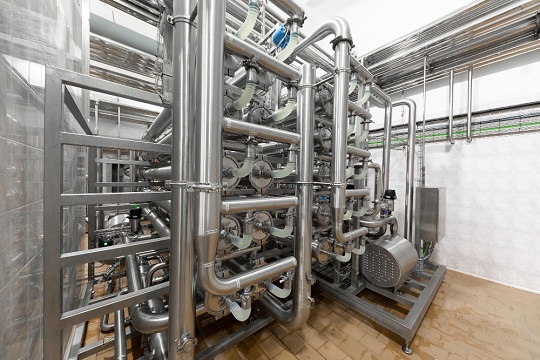
Chemical processing is one of the most important application areas for tantalum. Many industrial processes involve highly corrosive acids, chemical mixtures, and elevated temperatures. These environment can rapidly attack conventional metals. Tantalum offers exceptional resistance to corrosion in many of these environments. This helps protect equipment surfaces and extend component service life.
ASTM B708 tantalum plate and sheet can be considered for corrosion-resistant linings, fabricated process equipment, heat-transfer components, and other parts exposed to aggressive chemicals. The appropriate tantalum grade, thickness, fabrication method, and operating conditions should be evaluated before material selection.
Aerospace

Aerospace applications face demanding thermal and mechanical conditions. Materials must perform reliably in these environments. They must also meet strict weight and design requirements. Tantalum and tantalum alloys offer good high-temperature performance. They can be used in specialized aerospace components. These materials may be suitable when conventional materials cannot meet the required performance.
ASTM B708 tantalum plate and sheet may be used for specialized components. These components may require refractory-metal performance. In aerospace projects, material selection depends on several factors. These include temperature, mechanical loading, and oxidation conditions. Fabrication requirements must also be considered. Applicable aerospace specifications are also important.
Medical Applications

Tantalum is also used in medical and biomedical applications. This is because of its good biocompatibility and resistance to corrosion in the human body. These properties make tantalum useful for certain implants. It can also be used in surgical components and other specialized medical products.
ASTM B708 tantalum sheet can be used as a starting material. It can support the manufacturing of custom components. These components may require controlled dimensions and reliable material properties.
For medical applications, the material must meet additional requirements. These may include medical, regulatory, cleanliness, surface-finish, and manufacturing requirements. The basic material specification must also be met.
Electronics

Tantalum can serve specialized functions in electronics. It has distinctive physical and electrical properties. Tantalum sheet and strip may be considered for demanding applications. They are suitable when material purity is important. They can also be useful when dimensional stability or resistance to demanding processing conditions is required.
Manufacturers can use thin tantalum products as feedstock. These products can be used to make precision components or fabricated parts. The required thickness should match the specific application. Surface condition and purity are also important. Dimensional tolerances should match the manufacturing process.
Semiconductor Manufacturing

The semiconductor industry has strict material requirements. These include high purity, cleanliness, and dimensional consistency. Materials must also resist demanding process environments.
Tantalum can be used in specialized semiconductor manufacturing equipment. It can also support deposition-related applications. Its high-temperature capability makes it suitable for certain demanding process environments.
ASTM B708 tantalum sheet and strip may be used to manufacture or fabricate components for specialized equipment. In these applications, surface finish, contamination control, thickness tolerance, and fabrication quality can be just as important as the nominal tantalum grade.
Research and Specialized Applications
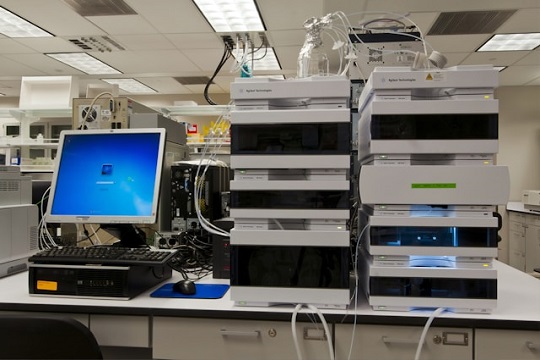
Research laboratories, universities, and advanced-materials manufacturers may require tantalum in small quantities. They may also need customized dimensions. Tantalum offers a combination of high purity, corrosion resistance, and a high melting point. It also has specialized physical properties. These characteristics make it useful for experimental equipment and high-temperature research.
ASTM B708 tantalum plate and sheet can be supplied in different thicknesses and dimensions depending on project requirements. Custom cutting or fabrication may also be considered when standard sizes do not match the experimental design.
Choosing the Right ASTM B708 Tantalum Product
The best ASTM B708 tantalum product depends on more than the application name. Buyers should consider tantalum grade, thickness, dimensions, surface condition, mechanical requirements, operating temperature, chemical exposure, fabrication method, and applicable quality requirements.
For example, a chemical-processing component may prioritize corrosion resistance and thickness. A semiconductor application may place greater emphasis on purity, surface quality, and dimensional tolerances. Medical applications may require additional controls related to biocompatibility and regulatory compliance.
Therefore, ASTM B708 tantalum plate, sheet, and strip should always be selected according to the actual service environment and project specifications. A qualified tantalum supplier can help confirm the appropriate grade, dimensions, tolerances, surface condition, and testing requirements before production.
Overall, ASTM B708 tantalum provides a practical material option for industries that require dependable performance in corrosive, high-temperature, high-purity, or highly specialized environments. By matching the tantalum grade and product form to the application, manufacturers can obtain material better suited to their performance and fabrication requirements.
ASTM B708 vs. Other Tantalum Specifications
The most important rule is to select a specification according to the product form, not simply because the material is tantalum.
| Requirement | ASTM B708 |
|---|---|
| Tantalum plate | Covered |
| Tantalum sheet | Covered |
| Tantalum strip | Covered |
| Tantalum rod/bar | Use the applicable specification |
| Tantalum wire | Use the applicable specification |
| Tantalum tube | Use the applicable specification |
For example, buyers researching ASTM B365 or ASTM B521 should verify the exact product form and current standard scope before choosing a specification. The applicable ASTM edition should also be confirmed against the engineering drawing, contract, or customer requirement.
How SIZEN Supports ASTM B708 Tantalum Sourcing
SIZEN LIMITED is a B2B supplier and manufacturer of high-purity tantalum and niobium materials. For buyers seeking ASTM B708 tantalum sheet or plate, SIZEN LIMITED can support standard and custom dimensions and technical quotation requirements.
SIZEN's typical tantalum sheet and plate range covers 0.07–10 mm thickness, 30–1,000 mm width, and 30–3,000 mm length. Custom requirements can be discussed for project-specific applications.
For a faster quote, provide the ASTM B708 grade, product form, dimensions, quantity, tolerances, surface requirements, certification needs, and intended application.
FAQs About ASTM B708
What is ASTM B708?
ASTM B708 is the specification for specified unalloyed and alloyed tantalum plate, sheet, and strip. It establishes requirements related to material grade, chemical composition, mechanical properties, manufacturing, and testing.
What does ASTM B708 cover?
ASTM B708 covers tantalum and tantalum-alloy plate, sheet, and strip. It does not serve as a general specification for tantalum rod, wire, or tube.
What grades are included in ASTM B708?
The listed grades are R05200, R05400, R05252, R05255, and R05240. They include unalloyed tantalum, tantalum-tungsten alloys, and a tantalum-niobium alloy.
Does ASTM B708 cover tantalum rod, wire, or tube?
No. ASTM B708 is intended for plate, sheet, and strip. Buyers should identify the required product form and use the applicable specification for rod, wire, or tube.
What information should be included in an ASTM B708 RFQ?
An RFQ should include the ASTM B708 grade, product form, thickness, width, length, quantity, tolerances, surface requirements, testing, certification, and intended application. Providing complete information helps suppliers quote the correct material and documentation.
Recent News
- Niobium vs Titanium: A Practical Material Selection Guide
- ASTM B708 Tantalum: Grades, Requirements & Buying Guide
- Niobium Ring Explained: Benefits, Applications and Sourcing Guide
- Tantalum Atomic Mass: What It Is and Why It Matters for Industrial Applications
- Niobium Density: How It Affects Material Performance and Design
- Tantalum Watch: Why This Rare Metal Is Becoming a Luxury Watchmaking Favorite
- Niobium Melting Point Explained: Properties, Comparisons, and Industrial Uses
- Tantalum Melting Point: Why 3,017°C Makes It One of the Most Valuable Refractory Metals
- Tantalum Density Explained: Why This Heavy Metal Matters
- Tantalum Hafnium Carbide (Ta₄HfC₅): The Ultra-High-Temperature Material Behind Advanced Engineering