
Niobium Density: How It Affects Material Performance and Design
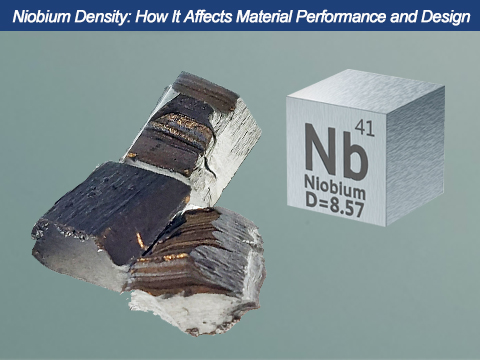
Niobium Density: Key Data at a Glance
| Property | Value |
|---|---|
| Niobium density | 8.57–8.60 g/cm³ |
| Density in kg/m³ | 8,570–8,600 kg/m³ |
| Density in lb/in³ | About 0.31 lb/in³ |
| Reference condition | Solid niobium at around 20°C |
| Material category | Refractory metal |
Niobium density is approximately 8.57 g/cm³ at room temperature. This places it between lightweight titanium and heavier metals like tantalum and tungsten. This balanced density offers key advantages to engineers. It impacts component weight, structural design, and manufacturing processes. Ultimately, it plays a major role in overall material performance.
Niobium is widely used across many advanced industries. It serves aerospace, medical, energy, electronics, and manufacturing applications. The metal combines moderate weight with excellent corrosion resistance. It also provides high-temperature capability and mechanical stability. Understanding niobium density helps engineers choose the right material. This is critical when balancing high performance with strict weight control.
What Is the Density of Niobium?
Niobium density refers to the mass of niobium contained in a specific volume of material. In simple terms, it shows how heavy a niobium component will be based on its size. The standard niobium density value is approximately 8.57–8.60 g/cm³ at room temperature.
For engineering calculations, niobium density is commonly expressed in several units:
- 8.57–8.60 g/cm³
- 8,570–8,600 kg/m³
- Approximately 0.31 lb/in³
The measured density applies to solid niobium under normal conditions (usually around 20°C). Small differences in reported values may occur. This is because of material purity, testing methods, and manufacturing conditions.
Density is a key physical property because it directly affects component mass. Engineers rely heavily on density data during the design process. They use it when designing parts and estimating material requirements. It also helps them calculate transportation costs. Finally, density data allows them to predict the final weight of finished products.
Compared with many common engineering metals, niobium has a moderate density. It is heavier than aluminum, titanium, and steel, but significantly lighter than tantalum and tungsten. This position gives niobium a useful balance. It provides all the advantages of a refractory metal. At the same time, it avoids the extreme weight challenges of very dense materials.
Companies must evaluate materials for specialized projects. This is especially true for aerospace parts, medical devices, and additive manufacturing. Understanding niobium density serves as a vital first step in this process. It helps engineers determine if niobium meets their specific application needs.
Niobium Density Compared to Other Engineering Metals
When selecting materials, engineers rarely consider density alone. Instead, they compare density with other important factors. These include strength, corrosion resistance, melting point, durability, and manufacturing requirements.
Niobium density is considered moderate among advanced engineering metals. It is much lighter than tantalum and tungsten but heavier than titanium and aluminum. This makes niobium attractive when a project requires refractory metal performance without excessive component weight.
| Material | Density (g/cm³) | Typical Applications |
|---|---|---|
| Aluminum | 2.70 | Lightweight structures, transportation components |
| Titanium | 4.51 | Aerospace parts, medical implants, high-strength components |
| Steel | 7.85 | Structural parts, automotive, industrial equipment |
| Niobium | 8.57–8.60 | Refractory alloys, superconducting materials, high-temperature components |
| Tantalum | 16.6 | Chemical equipment, corrosion-resistant components |
| Tungsten | 19.3 | Radiation shielding, counterweights, high-density applications |
The comparison shows why niobium is often selected for specialized engineering applications. Titanium offers lower density and excellent strength-to-weight performance. Niobium provides better high-temperature capability and corrosion resistance in some environments.
Compared with tantalum and tungsten, niobium density is much lower, which can reduce the weight of finished components. This advantage is valuable in industries such as aerospace and energy. In these fields, reducing mass can improve efficiency and simplify system design.
However, density should always be evaluated together with other material properties. A lightweight material is not always the best choice. It can fail if it cannot withstand operating temperatures. It may also break down under chemical exposure or mechanical stress.
Consider an aerospace engineer designing high-temperature components. They may accept a higher density than titanium. This is because niobium delivers far better performance in extreme environments. Medical device manufacturers follow a similar logic. They select niobium because it balances density, biocompatibility, and long-term stability for implants.
Comparing niobium and tantalum density is critical. Examining their other material traits is just as important. Understanding these factors leads to more informed decisions. It helps engineers meet every performance requirement for their project.
Why Niobium Density Matters in Engineering Design
What does niobium density mean for real-world engineering? A density value is not just a number on a technical datasheet. It directly influences how engineers design, manufacture, and use niobium components.
One of the biggest advantages of niobium is its balance between weight and performance. With a density of about 8.57 g/cm³, niobium is heavier than titanium but far lighter than tungsten and tantalum. This makes it useful for applications that require refractory metal properties while avoiding unnecessary weight.
In aerospace systems, material selection often involves a trade-off between durability and mass. Components exposed to high temperatures need materials that remain stable under extreme conditions. Niobium alloys can provide high-temperature performance. At the same time, they maintain a more manageable weight compared with ultra-dense metals.
In energy and industrial equipment, niobium density is also important. It affects structural calculations, transportation requirements, and installation processes. Engineers must understand the relationship between component size and final weight before production begins.
In medical device design, material density is critical. It affects how implants feel, remain stable, and integrate with the body. Choosing a material involves avoiding two main risks. A material that is too light might lack required structural support. Conversely, a material that is overly dense can create excessive, unneeded weight.
Therefore, niobium density is an important design factor. It helps engineers balance strength, durability, weight, and long-term performance.
Why Niobium Density Matters in Engineering Design
Beyond basic weight calculations, niobium density also affects manufacturing decisions and product performance. Engineers need accurate density data when designing parts with strict size, weight, and performance requirements.
In additive manufacturing, material density is essential for predicting part weight. It is especially vital for complex lattice structures and lightweight aerospace components. Designers need to know their exact material requirements before printing starts. By using the correct niobium density value, engineers prevent unexpected weight increases. This simple step ensures much higher design accuracy.
Density also influences material usage and cost. A higher-density material requires more mass for the same volume. This affects raw material consumption, shipping, machining, and handling. Comparing niobium to tantalum and tungsten is a critical step for design teams. It gives engineers a clear view of how each metal performs. From there, they can easily decide if niobium offers the ideal balance of performance and practical weight.
For applications exposed to harsh environments, niobium offers a valuable combination of properties. It has a high melting point, strong corrosion resistance, and stable performance at elevated temperatures. Its moderate density allows manufacturers to create reliable components without the extreme weight associated with some other refractory metals.
A simple design principle is:
Use niobium when you need refractory metal performance, corrosion resistance, and high-temperature stability with a manageable component weight.
This balance is one reason niobium continues to attract attention in aerospace, medical, energy, and advanced manufacturing industries.
Niobium Density in Different Product Forms
Pure niobium has a consistent material density. Besides, the way niobium is processed can affect how engineers calculate and use density data. Different product forms require different density considerations during design and manufacturing.
Solid Niobium Bars, Rods, Sheets, and Plates
For solid niobium products, including bars, rods, sheets, and plates, engineers typically use the bulk niobium density value of about 8.57–8.60 g/cm³.
This value helps calculate:
- Component weight
- Material requirements
- Machining allowance
- Structural performance
For example, a manufacturer designing a niobium component for chemical processing equipment can estimate the final weight before production by combining the material volume with its density.
Niobium Powder for Additive Manufacturing
Niobium powder requires additional density considerations. While the true density of niobium remains around 8.57 g/cm³, powder characteristics such as particle size, shape, and packing behavior affect practical processing performance.
Important density terms for niobium powder include:
- True density: The actual density of the niobium material itself.
- Bulk density: The density of loose powder before compression.
- Tap density: The density after controlled vibration or packing.
For additive manufacturing, understanding powder density helps engineers optimize powder flow, layer formation, and final part quality.
Niobium Alloys
When niobium is combined with other elements, the final density may change slightly depending on alloy composition. For example, niobium-based alloys and niobium-containing steels may have different density values from pure niobium.
However, pure niobium density remains a useful starting point when evaluating material performance.
Niobium Coatings and Thin Films
For coating applications, engineers focus on mass per unit area rather than only bulk density. Thickness control becomes especially important for sputtering targets, optical coatings, and electronic applications.
| Niobium Product Form | Density Concept Used by Engineers |
|---|---|
| Solid bars, rods, sheets, plates | Bulk density: 8.57–8.60 g/cm³ |
| Niobium alloys | Density varies with alloy composition |
| Niobium powder | Bulk density and tap density depend on powder properties |
| Niobium coatings | Mass per area depends on thickness and density |
SIZEN LIMITED provides high-purity niobium products, including sheets, rods, bars, and wires. The company can support customers with technical information such as material specifications, density data, and application guidance.
How Different Industries Benefit from Niobium Density
The value of niobium density becomes clearer when combined with real engineering requirements. Different industries use niobium because it offers a practical balance between weight, strength, and extreme-environment performance.
Aerospace and Energy Systems

Aerospace engineers constantly search for materials that can survive high temperatures without adding unnecessary weight. Niobium's density is higher than titanium but much lower than tungsten and tantalum. This makes it suitable for applications where performance and mass must be balanced.
Potential uses include:
- High-temperature structural components
- Turbine-related parts
- Energy system components
- Specialized aerospace alloys
For example, replacing an extremely dense refractory metal with niobium may reduce component weight while maintaining required temperature resistance.
Medical Devices and Implants

In medical applications, material selection depends on more than strength. Engineers also consider biocompatibility, stability, and patient comfort.
Niobium provides:
- Good corrosion resistance
- Excellent biocompatibility
- Stable mechanical performance
Its density gives implants a solid structure while remaining more manageable than heavier refractory metals. This makes niobium attractive for medical devices, implant components, and precision instruments.
Chemical Processing and Industrial Equipment

Chemical environments can be highly aggressive. Materials must resist corrosion while maintaining long service life.
Niobium's corrosion resistance, combined with its moderate density, makes it suitable for specialized equipment where durability is essential but excessive weight is undesirable.
Applications may include:
- Chemical processing components
- Protective layers
- High-performance industrial parts
Additive Manufacturing and Advanced Manufacturing

For metal additive manufacturing, density directly affects design calculations. Engineers need accurate niobium powder density information to predict final part weight, optimize structures, and improve production consistency.
Niobium powder can support advanced manufacturing methods where designers need complex geometries, lightweight structures, or customized components.
Practical Design Tips When Selecting Niobium
When evaluating niobium for a project, engineers should consider niobium density together with other material properties.
1. Calculate weight early.
Use niobium density during the design stage to predict final component mass and avoid unexpected weight issues.
2. Compare materials based on total performance.
Do not select materials by density alone. Consider strength, corrosion resistance, temperature capability, and service life.
3. Compare niobium with alternatives.
Niobium may be a better choice than tungsten or tantalum when weight reduction is important.
4. Consider manufacturing methods.
Machining, forming, welding, and additive manufacturing processes can influence material selection.
5. Work with a reliable supplier.
Technical support and accurate material data help ensure the selected niobium grade meets project requirements.
Conclusion: Choosing the Right Niobium Material for Your Project
Niobium density of about 8.57 g/cm³ gives engineers an important advantage: strong refractory performance without the extreme weight of metals like tantalum and tungsten. From aerospace and medical devices to additive manufacturing, niobium helps designers balance weight, durability, and performance.
SIZEN LIMITED supplies high-purity niobium sheets, rods, bars, wires, and customized solutions. Contact SIZEN's technical team to explore niobium materials designed for your specific performance and weight requirements.
Recent News
- Niobium vs Titanium: A Practical Material Selection Guide
- ASTM B708 Tantalum: Grades, Requirements & Buying Guide
- Niobium Ring Explained: Benefits, Applications and Sourcing Guide
- Tantalum Atomic Mass: What It Is and Why It Matters for Industrial Applications
- Niobium Density: How It Affects Material Performance and Design
- Tantalum Watch: Why This Rare Metal Is Becoming a Luxury Watchmaking Favorite
- Niobium Melting Point Explained: Properties, Comparisons, and Industrial Uses
- Tantalum Melting Point: Why 3,017°C Makes It One of the Most Valuable Refractory Metals
- Tantalum Density Explained: Why This Heavy Metal Matters
- Tantalum Hafnium Carbide (Ta₄HfC₅): The Ultra-High-Temperature Material Behind Advanced Engineering