
Tantalum Melting Point: Why 3,017°C Makes It One of the Most Valuable Refractory Metals
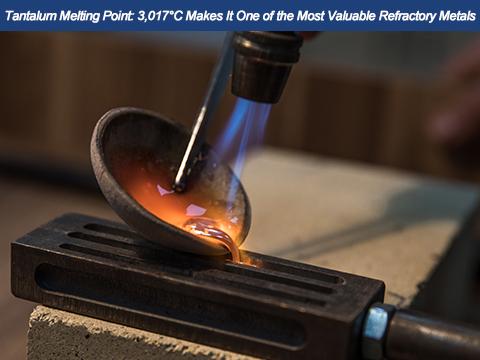
Quick Answer: Tantalum Melting Point at a Glance
| Property | Value |
|---|---|
| Tantalum melting point | 3,017°C (5,463°F) |
| Boiling point | 5,458°C (9,856°F) |
| Atomic number | 73 |
| Thermal conductivity | 57.5 W/m·K (20°C) |
| Classification | Refractory metal |
| Typical industries | Aerospace, semiconductors, chemical processing, medical, energy |
Quick Answer:
The tantalum melting point is 3,017°C (5,463°F), making tantalum one of the highest-melting metals used in industry. It offers outstanding heat resistance alongside excellent corrosion resistance. It also features a high level of purity. This combination makes it a preferred choice for demanding applications. Key examples include vacuum furnaces, semiconductor equipment, chemical processing systems, and aerospace components.
Introduction
The tantalum melting point is often the first property engineers and buyers look up. It is a critical starting point when choosing materials for high-temperature environments. However, the number alone does not tell the whole story. A material must do more than just perform well under extreme heat. It must also resist corrosion and maintain its mechanical strength. Finally, it must remain reliable throughout years of service.
Tantalum excels in all of these areas. With a melting point of 3,017°C (5,463°F), it belongs to the refractory metal family, a group of metals known for exceptional heat resistance. Tantalum is stable in challenging environments. Many conventional metals fail under these same conditions. They are quickly damaged by high temperatures or aggressive chemicals. Vacuum conditions can also ruin them. Tantalum resists all of this wear and tear.
This guide breaks down why the tantalum melting point is so critical. We compare tantalum with other high-performance metals. We also explain its continued use in major industries. These include aerospace, semiconductor manufacturing, chemical processing, and medical technology. Are you selecting materials for a new project? Or are you simply comparing refractory metals? Understanding tantalum's complete performance profile is essential. It ensures you can make a highly informed decision.
What Is the Tantalum Melting Point?
The tantalum melting point is 3,017°C (5,463°F). Thanks to this property, tantalum ranks among the highest-melting engineering metals on the market. This makes it an exceptional choice for demanding environments. It thrives in applications that require prolonged exposure to extreme heat.
Tantalum is a dense, blue-gray refractory metal with the chemical symbol Ta and atomic number 73. Tantalum is valued for its ability to withstand high temperatures. It also features remarkable corrosion resistance, excellent ductility, and high purity. These properties allow tantalum to perform reliably in industries where failure is not an option.
Why Does Tantalum Have Such a High Melting Point?
The exceptionally high tantalum melting point comes from its strong metallic bonding. It is also a result of its stable crystal structure. Consequently, considerable thermal energy is required to break these strong atomic bonds. This high threshold allows tantalum to remain solid at extreme temperatures. In fact, it exceeds the thermal limits of most other engineering metals.
However, melting point alone is not the reason tantalum is widely used. It maintains dimensional stability and mechanical strength during repeated heating and cooling cycles. This makes it suitable for high-temperature equipment where precision and reliability are critical.
Why Does the Tantalum Melting Point Matter in Industrial Applications?
For industrial users, the tantalum melting point is much more than a material property listed on a specification sheet. It directly affects equipment reliability, manufacturing efficiency, maintenance costs, and overall production performance.
In high-temperature processes, many conventional metals gradually soften. They can completely lose their mechanical strength long before they reach their melting points. Tantalum behaves differently. Its exceptional thermal stability allows it to maintain its shape and performance. This stability holds true even under prolonged exposure to elevated temperatures. It is especially reliable in vacuum or inert gas environments.
Tantalum's reliability makes it indispensable in specific industries. It's used where production interruptions are too costly to risk. It is also the top choice for environments where equipment failure simply is not an option.
Supports Stable High-Temperature Operation
Many industrial processes require components that can withstand continuous heat without deformation. This requirement is vital for equipment operating under demanding conditions. Affected machinery includes vacuum furnaces and crystal growth systems. It also includes semiconductor manufacturing equipment and thermal processing facilities.
Thanks to its high tantalum melting point, components such as crucibles, heat shields, furnace fixtures, and thermowells can continue operating with excellent dimensional stability. This helps maintain product quality while reducing the risk of unexpected failures.
Reduces Downtime and Maintenance Costs
Replacing damaged high-temperature components often requires production shutdowns, labor, and additional replacement parts. These costs quickly add up over the lifetime of industrial equipment.
Tantalum remains stable under extreme conditions. Therefore, it generally offers a longer service life than many conventional materials. Fewer replacements translate into lower maintenance expenses, reduced downtime, and improved production efficiency.
For manufacturers, this often results in a lower total cost of ownership, even if the initial material investment is higher.
Combines Heat Resistance with Corrosion Resistance
One of tantalum's greatest strengths is that it does not rely solely on its high melting point. It also provides exceptional resistance to corrosion. It's effective against many aggressive acids and chemical environments.
This unique combination allows tantalum to outperform many alternative materials. It excels in applications where both heat and chemical attack occur at the same time. Several systems benefit from this balanced performance. Key examples include chemical reactors and heat exchangers. It is also ideal for acid-processing equipment and semiconductor process chambers.
Engineers often look for materials for demanding environments. During this process, they discover that the best choice is not simply the metal with the highest melting point. Instead, they need a material that delivers reliable performance. This reliability must hold up across all operating conditions. Tantalum frequently meets that exact requirement.
Tantalum Melting Point Compared with Other High-Performance Metals
The tantalum melting point is impressive. However, material selection involves more than comparing temperatures. Engineers also consider corrosion resistance, fabrication, mechanical properties, density, availability, and long-term operating costs.
Each refractory metal has its own strengths. Understanding these differences helps buyers choose the right material for specific applications.
| Metal | Melting Point (°C) | Best For | Key Limitation |
|---|---|---|---|
| Tungsten | 3,422 | Ultra-high-temperature furnace components | Difficult to machine and relatively brittle |
| Rhenium | 3,186 | Aerospace engines and specialized superalloys | Very expensive |
| Tantalum | 3,017 | High-temperature, corrosion-resistant equipment | Higher cost than common engineering alloys |
| Niobium | 2,477 | Lightweight alloys and superconductors | Lower heat resistance |
| Titanium | 1,668 | Lightweight structural applications | Limited performance at extreme temperatures |
When Is Tantalum the Best Choice?
Tungsten has a higher melting point. However, tantalum is often the better solution for specific applications. It excels in environments that involve both heat and corrosive chemicals. Its outstanding corrosion resistance allows it to operate reliably. This protection keeps it safe in conditions that would rapidly damage many other metals.
Tantalum is also easier to fabricate than tungsten. This makes it suitable for components with complex shapes or tight dimensional tolerances. This flexibility reduces manufacturing challenges while expanding design possibilities.
Tantalum is a highly dependable material for several key industries. These include semiconductor manufacturing, chemical processing, and medical technology. Its reliability comes from a unique combination of traits. It offers high melting point, outstanding corrosion resistance, and high purity.
When Other Metals May Be More Suitable
There are situations where another material may provide better value. Tungsten remains the preferred choice for the most extreme temperatures. Niobium is often selected for lightweight high-performance alloys. Titanium is ideal when reducing weight is more important than maximizing heat resistance.
Engineers should not focus only on the highest melting point. Instead, they need to evaluate the complete operating environment. This evaluation must include temperature and chemical exposure. It should also account for fabrication requirements. Finally, engineers must consider the expected service life and total lifecycle cost. This balanced approach leads to more reliable and cost-effective material selection.
What Makes Tantalum Perform So Well at High Temperatures?
The tantalum melting point is one of the main reasons this metal is used in demanding industries. However, a high melting point alone does not make a material reliable. To perform well in real production environments, a metal must also resist corrosion, keep its strength, and stay stable over time.
Tantalum offers all of these advantages. It performs well under high heat, especially in vacuum or inert gas environments. It also keeps its shape during repeated heating and cooling cycles. This helps improve product quality and extends equipment life.
Another important benefit is its excellent corrosion resistance. Many metals lose strength when exposed to hot acids or harsh chemicals. Tantalum can resist attack from many corrosive media. This makes it a trusted material for chemical plants and semiconductor equipment.
Its thermal conductivity is about 57.5 W/m·K at 20°C, which helps distribute heat more evenly. Better heat distribution reduces thermal stress and improves the stability of high-temperature components.
High-purity tantalum is valuable in specific industries. It is ideal where contamination must be kept to an absolute minimum. Affected fields include semiconductor manufacturing, vacuum coating, and advanced research. All of these sectors require clean, stable materials. They depend on metals that will not introduce unwanted impurities into the process.
Key Takeaway
A high tantalum melting point is only one part of the picture. Tantalum is widely chosen because it combines heat resistance, corrosion resistance, mechanical stability, and high purity in one material. This balanced performance helps reduce equipment failure and improve long-term reliability.
Where Is High-Melting-Point Tantalum Used?
The high tantalum melting point makes this metal suitable for many industries that operate under extreme conditions. In many cases, the combination of heat resistance and corrosion resistance is more valuable than either property alone.
Aerospace Industry

Aircraft engines, rocket systems, and other aerospace equipment often operate at very high temperatures. Components must remain stable while facing both heat and mechanical stress.
Tantalum is used in high-temperature alloys, furnace components, heat shields, and other specialized parts. Its ability to maintain strength under demanding conditions helps improve safety and reliability.
Semiconductor Manufacturing

The semiconductor industry requires materials that can handle both heat and very clean processing environments. Even small amounts of contamination can affect product quality.
Because of its high purity and excellent thermal stability, tantalum is commonly used in sputtering targets, vacuum chambers, deposition equipment, and furnace components. Its performance helps maintain consistent manufacturing results.
Chemical Processing
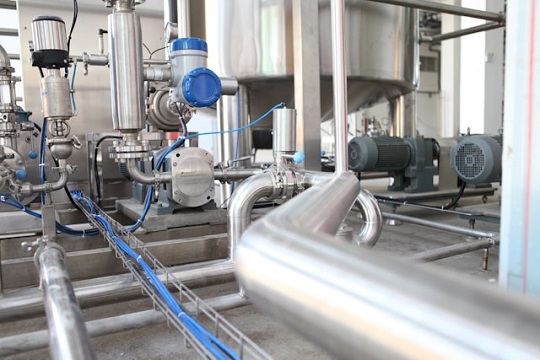
Chemical plants often expose equipment to both high temperatures and aggressive chemicals. Many common metals corrode quickly under these conditions.
Tantalum is widely used for reactors, heat exchangers, pipes, vessels, and liners that handle strong acids. Its excellent corrosion resistance helps extend equipment life while reducing maintenance costs.
Medical Industry

Tantalum is also important in the medical field. It is highly biocompatible, meaning it works well inside the human body.
Medical manufacturers use tantalum for implants, surgical instruments, and diagnostic equipment. Although body temperature is far below the tantalum melting point, the metal's purity, stability, and corrosion resistance make it a trusted material for long-term medical use.
Across these industries, tantalum helps improve product quality, increase equipment reliability, and lower lifecycle costs.
Where Does Tantalum Outperform Other High-Temperature Metals?
When selecting a material, engineers rarely choose based only on the highest melting point. Instead, they look for the material that delivers the best overall performance.
This is where tantalum stands out.
Compared with titanium, tantalum performs much better in extremely hot environments. Titanium is lighter and less expensive, but it cannot match the tantalum melting point or its performance under continuous high heat.
Compared with niobium, tantalum offers better corrosion resistance and greater thermal stability. Niobium remains a good choice for lightweight alloys, but tantalum is often preferred for harsh chemical environments.
Compared with tungsten, tantalum has a slightly lower melting point. However, it is generally easier to machine and fabricate. It also offers much better corrosion resistance in many industrial processes.
When comparing materials, buyers should consider several factors:
- Maximum operating temperature
- Chemical exposure
- Corrosion resistance
- Material purity
- Ease of machining and fabrication
- Expected service life
- Maintenance costs
- Total lifecycle cost
In many applications, the goal is not to find the metal with the highest melting point. The goal is to choose the material that delivers the best long-term value. For many chemical, semiconductor, and aerospace applications, tantalum provides that balance.
Tantalum Product Forms for High-Temperature Applications
Different manufacturing processes require different forms of tantalum. Choosing the right product improves machining efficiency, reduces waste, and supports better final performance.
Tantalum Sheet and Plate
Sheets and plates are commonly used for heat exchangers, chemical vessels, furnace liners, and shielding components. They offer excellent corrosion resistance and are easy to fabricate into larger structures.
Tantalum Rod and Bar
Rods and bars are widely used for machined parts, fasteners, electrodes, and precision components. They provide high strength and excellent dimensional stability during machining.
Tantalum Wire
Tantalum wire is suitable for heating elements, electronic components, laboratory equipment, and specialty industrial applications. Its combination of flexibility and heat resistance makes it useful in many precision processes.
Tantalum Powder
Tantalum powder plays an important role in additive manufacturing, capacitor production, thermal spraying, and advanced materials research. High-purity powder supports consistent product quality and reliable processing.
Custom Tantalum Components
Some applications require custom sizes or complex shapes. Machined parts, fabricated assemblies, and special dimensions help manufacturers meet unique engineering requirements while reducing assembly time.
Selecting the correct product form is just as important as selecting the right material. It helps improve manufacturing efficiency and overall project performance.
Choosing the Right Tantalum Supplier for High-Temperature Projects
Even the best material cannot deliver reliable results without consistent quality. That is why choosing an experienced supplier is an important part of every project.
When evaluating a tantalum supplier, buyers should consider several key factors.
First, look for high-purity materials with reliable quality control. Consistent chemical composition helps ensure stable performance in demanding applications.
Second, check whether the supplier offers custom sizes and machining services. Many industrial projects require non-standard dimensions or special tolerances.
Third, consider supply stability. Reliable delivery helps prevent production delays and supports long-term manufacturing plans.
Finally, technical support is valuable. A supplier that understands refractory metals can help customers choose the right product form and material grade for their application.
SIZEN LIMITED supplies high-purity tantalum products to industrial users around the world. Our product line is highly diverse. We offer tantalum sheet, plate, rod, and bar. We also provide wire, powder, and custom-machined components. The company caters to different project scales. We support small quantities for research as well as larger volumes for production. Every order comes with consistent quality, flexible manufacturing, and dependable global delivery.
Working with a trusted supplier - SIZEN LIMITED helps reduce sourcing risks while improving product performance and project efficiency.
Conclusion
The tantalum melting point of 3,017°C (5,463°F) is one of the highest among engineering metals. More importantly, tantalum combines this exceptional heat resistance with outstanding corrosion resistance, high purity, and reliable mechanical stability.
Tantalum's unique qualities make it perfect for demanding applications. It serves vital roles in aerospace and semiconductor manufacturing. It is equally important in chemical processing and medical technology. You will find it across various other high-performance industries. When choosing a material, engineers cannot just look at the melting point. They must analyze the entire operating environment. This means checking temperature limits, chemical exposure, fabrication needs, and expected service life.
Recent News
- Niobium vs Titanium: A Practical Material Selection Guide
- ASTM B708 Tantalum: Grades, Requirements & Buying Guide
- Niobium Ring Explained: Benefits, Applications and Sourcing Guide
- Tantalum Atomic Mass: What It Is and Why It Matters for Industrial Applications
- Niobium Density: How It Affects Material Performance and Design
- Tantalum Watch: Why This Rare Metal Is Becoming a Luxury Watchmaking Favorite
- Niobium Melting Point Explained: Properties, Comparisons, and Industrial Uses
- Tantalum Melting Point: Why 3,017°C Makes It One of the Most Valuable Refractory Metals
- Tantalum Density Explained: Why This Heavy Metal Matters
- Tantalum Hafnium Carbide (Ta₄HfC₅): The Ultra-High-Temperature Material Behind Advanced Engineering