
Niobium Melting Point Explained: Properties, Comparisons, and Industrial Uses
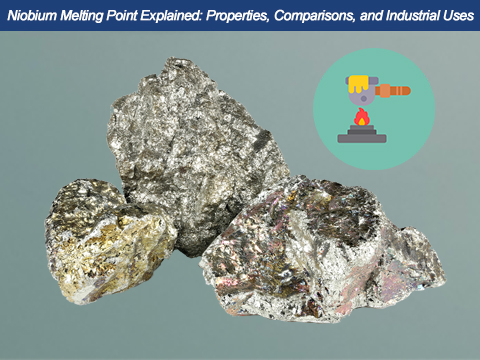
One property stands out above all others when choosing a metal for high-temperature environments. That property is its melting point. The niobium melting point is incredibly high. It sits at approximately 2,468°C (4,474°F). This temperature rating makes it one of the world's most important refractory metals. This exceptional heat resistance delivers a major benefit. It allows niobium to maintain both its strength and stability under extreme conditions.
However, the niobium melting point is only part of the story. Niobium also offers excellent corrosion resistance, good ductility, and strong alloying performance. These qualities make it a valuable material across several sectors. It is widely used in the aerospace and electronics industries. It is also essential for the energy sector. Furthermore, it plays a critical role in medical and chemical processing industries.
In this guide, you will explore the key benefits of this material. First, you'll learn exactly why the niobium melting point matters. Next, you will see how it compares with other refractory metals. Finally, you'll discover why engineers and manufacturers choose niobium. They continue to rely on it for demanding applications.
Quick Facts About Niobium Melting Point
The table below summarizes the most important facts about the niobium melting point and its physical properties.
| Property | Value |
|---|---|
| Melting Point | 2,468°C (4,474°F) |
| Boiling Point | 4,927°C (8,901°F) |
| Density | 8.57 g/cm³ |
| Crystal Structure | Body-Centered Cubic (BCC) |
| Metal Category | Refractory Metal |
| Common Product Forms | Sheet, Plate, Rod, Bar, Wire, Foil, Powder, Sputtering Target |
What Is the Melting Point of Niobium?
The niobium melting point is approximately 2,468°C (4,474°F). This extremely high temperature places niobium in the refractory metal family. It's a group of metals known for maintaining strength and stability under intense heat. Because of this property, niobium is widely used in applications where ordinary metals would soften, deform, or fail.
Why the Niobium Melting Point Matters
The niobium melting point is much more than a number on a material data sheet. It directly affects how the metal performs in demanding industrial environments. When temperatures rise, many metals begin to lose strength or change shape. Niobium remains stable at temperatures far beyond the limits of most engineering materials.
This delivers greater confidence to engineers and purchasing professionals. It is especially true when they are designing high-heat equipment. This machinery must operate under continuous or repeated heating. Components made from niobium offer a great solution. They deliver reliable performance while successfully reducing the risk of heat-related failure.
A high niobium melting point provides several important advantages:
- Maintains structural strength at elevated temperatures
- Resists thermal deformation during long operating cycles
- Extends component service life
- Improves process safety and equipment reliability
- Reduces maintenance and replacement costs
These benefits make niobium an attractive choice for industries where temperature control is critical.
For example, aerospace manufacturers rely on niobium-containing alloys. They use these materials in engine components. These parts routinely experience extreme heat during operation. Industrial furnaces also face harsh conditions. They rely on heat-resistant materials to maintain their dimensional stability. This stability must hold up over many heating cycles. Chemical processing equipment faces its own unique challenges. It may face both high temperatures and corrosive environments. These dual threats make niobium an excellent material option.
Another reason the niobium melting point matters is manufacturing consistency. Metals are exposed to high temperatures during several common fabrication processes. These include welding and heat treatment. Niobium offers an excellent solution due to its outstanding thermal stability. This property helps manufacturers produce better parts. It results in fewer defects. It also ensures significantly better dimensional accuracy.
Selecting a material with the right melting point is a balancing act. It is ultimately about balancing performance, safety, and long-term cost. Other material properties are also important. These include corrosion resistance and raw strength. However, the niobium melting point remains the most critical factor. It forms the foundation for its outstanding performance. This is especially true in high-temperature applications.
Why Niobium Is Classified as a Refractory Metal
Refractory metals are a small group of metals. They are known for their exceptionally high melting points. They are also valued for their unique durability. Specifically, they maintain their strength under extreme heat. They are commonly selected for environments where ordinary metals cannot survive.
The main refractory metals include:
| Refractory Metal | Approximate Melting Point |
|---|---|
| Tungsten | 3,422°C |
| Rhenium | 3,186°C |
| Tantalum | 3,017°C |
| Molybdenum | 2,623°C |
| Niobium | 2,468°C |
The niobium melting point is lower than a few select materials. Specifically, it sits below the melting points of tungsten, tantalum, and molybdenum. However, its melting point is still incredibly high. It is far higher than the melting points of common engineering metals. These include everyday materials like steel, aluminum, copper, and titanium.
What makes niobium especially valuable is its balanced combination of properties. Many refractory metals are difficult to machine or form. This difficulty occurs because they easily become brittle. They also frequently require specialized processing. Niobium offers a completely different experience by contrast. It features excellent ductility. Consequently, it can be fabricated into a wide variety of product forms. At the same time, it still provides outstanding heat resistance.
In addition to its high melting point, niobium also offers:
- Excellent corrosion resistance
- Good weldability
- High ductility
- Strong resistance to thermal fatigue
- Excellent compatibility with many alloy systems
Because of this balanced performance, niobium is often chosen when engineers need both high-temperature capability and practical manufacturing flexibility.
As a result, the niobium melting point is only one reason why the metal belongs in the refractory metal family. Its overall combination of heat resistance, workability, and durability makes it one of the most versatile refractory metals used in modern industry.
Niobium Melting Point Compared with Other High-Temperature Metals
Choosing a material for high-temperature applications requires careful research. The niobium melting point is often compared with other refractory and engineering metals. Niobium does not have the absolute highest melting point available. Instead, its true value lies in its balance. It combines heat resistance and a lighter weight. It also blends strong corrosion resistance with unmatched ease of fabrication.
The comparison below highlights the differences.
| Metal | Melting Point | Density (g/cm³) | Main Advantage | Typical Applications |
|---|---|---|---|---|
| Niobium | 2,468°C | 8.57 | Balanced heat resistance and ductility | Aerospace, superconductors, chemical equipment |
| Tantalum | 3,017°C | 16.69 | Outstanding corrosion resistance | Chemical processing, medical devices |
| Tungsten | 3,422°C | 19.25 | Highest melting point | Furnace components, rocket nozzles |
| Molybdenum | 2,623°C | 10.28 | High-temperature strength with lower cost | Heating elements, glass manufacturing |
| Titanium | 1,668°C | 4.51 | Lightweight and strong | Aircraft, marine, biomedical |
Tungsten has the highest melting point of all metals. This property makes it the preferred choice for the most extreme temperature environments. However, its high density and limited ductility can make machining and forming more difficult.
Tantalum offers exceptional corrosion resistance and a higher melting point than niobium. It is widely used in chemical processing equipment and medical devices. However, it is also significantly heavier and generally more expensive.
Molybdenum provides excellent high-temperature performance. It's often selected for furnace parts and heating elements. Compared with niobium, it can be more brittle in certain applications and may require more careful processing.
The niobium melting point may be lower than these metals. However, its overall performance makes it an attractive engineering material. It combines excellent thermal stability with lower density than tantalum or tungsten. These traits make it easier to reduce component weight without sacrificing heat resistance.
Niobium also offers superior formability compared with several other refractory metals. Manufacturers can produce sheets, rods, wires, foils, and complex components with greater ease. This helps lower production costs and improve manufacturing efficiency.
Choosing the right material for many industrial projects is not about one feature. It is not simply about selecting the highest melting point. Instead, it is about finding a careful balance. You must weigh thermal performance and corrosion resistance. You also need to consider mechanical properties, weight, and fabrication requirements. In many of these situations, the niobium melting point delivers exactly what is needed. It provides the perfect level of heat resistance. At the same time, it offers practical advantages. These extra benefits make niobium a smart and cost-effective choice.
Key Physical Properties That Work Together with the Niobium Melting Point
The niobium melting point is one of the metal's most important characteristics, but it is not the only reason engineers choose niobium. Its value comes from a combination of physical and mechanical properties that work together. These properties help niobium perform reliably in harsh environments where high temperatures, corrosion, and mechanical stress are common.
The table below shows the key properties that complement the niobium melting point.
| Property | Benefit |
|---|---|
| High Melting Point | Maintains strength and shape at elevated temperatures |
| Corrosion Resistance | Performs well in many aggressive chemical environments |
| Good Ductility | Easy to form, machine, and weld into complex parts |
| Thermal Stability | Maintains reliable performance during repeated heating cycles |
| Alloying Capability | Improves the strength and toughness of steels and superalloys |
| Superconductivity | Suitable for advanced scientific and medical equipment |
One of niobium's biggest advantages is its excellent ductility. Unlike some refractory metals, niobium can be rolled, drawn, and machined into many product forms without becoming excessively brittle. This makes manufacturing more efficient and expands its range of applications.
Niobium also offers good corrosion resistance in many environments. This helps extend the service life of equipment exposed to chemicals or moisture, reducing maintenance costs over time.
Another valuable property is its ability to form strong alloys. Even a small amount of niobium can improve the strength, toughness, and weldability of steel. This is why niobium is widely used in high-strength low-alloy (HSLA) steels for pipelines, buildings, bridges, and vehicles.
Together, these characteristics make the niobium melting point even more valuable. Rather than relying on heat resistance alone, industries benefit from a material that also delivers durability, workability, and long-term reliability.
Industrial Applications That Depend on the Niobium Melting Point
The high niobium melting point supports a wide range of industries. While every application has different performance requirements, they all benefit from niobium's ability to withstand demanding operating conditions.
Aerospace

Aircraft engines, rocket systems, and other aerospace components often operate under extreme temperatures. Niobium and niobium-containing alloys help improve heat resistance. At the same time, they keep components lighter than many other refractory metal solutions.
Steel Manufacturing

The largest use of niobium is in steel production. Small additions of niobium significantly increase strength, toughness, and weldability. This allows manufacturers to produce stronger pipelines, bridges, construction materials, and automotive parts while using less material.
Electronics and Semiconductor Manufacturing

High-purity niobium is used to manufacture sputtering targets, electronic components, and specialized thin films. Its stable performance and excellent material properties make it suitable for advanced manufacturing processes.
Medical Industry

Niobium's corrosion resistance and biocompatibility make it useful for certain medical implants, surgical instruments, and diagnostic equipment. Its long-term stability helps ensure reliable performance in healthcare applications.
Energy and Scientific Research
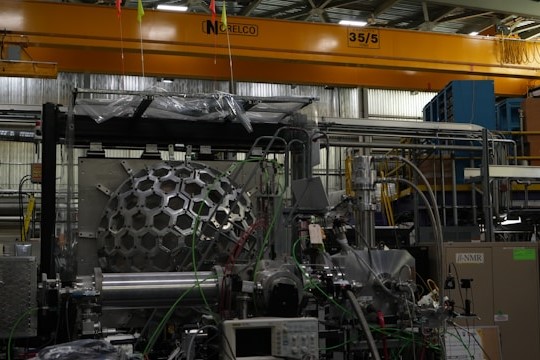
Niobium plays an important role in superconducting technologies used in MRI systems, particle accelerators, and fusion research. These applications rely on niobium's unique electrical properties in addition to its excellent thermal stability.
Chemical Processing
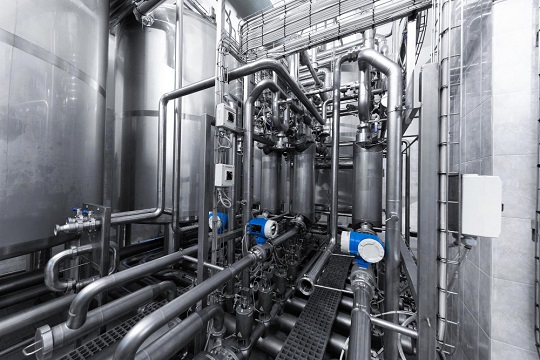
Chemical plants often require materials that can tolerate both heat and corrosive media. Niobium features a high melting point. It also offers excellent corrosion resistance. This combination makes it a valuable industrial material. It is perfectly suited for reactors and heat exchangers. It is also ideal for other heavy-duty processing equipment. It easily handles the most demanding operating conditions.
What Product Forms of Niobium Are Available?
Most buyers are not simply looking for "niobium". Instead, they need a specific product form that fits their manufacturing process or application. Choosing the correct form helps improve machining efficiency, reduce material waste, and achieve better product performance.
The most common niobium products include:
| Product Form | Typical Applications |
|---|---|
| Sheet | Heat shields, fabricated components |
| Plate | Industrial equipment, structural parts |
| Rod | Machined components, fasteners |
| Bar | Precision engineering applications |
| Wire | Electronics, welding, research |
| Foil | Semiconductor and medical applications |
| Powder | Additive manufacturing, powder metallurgy |
| Sputtering Target | Thin-film deposition and semiconductor coatings |
Different industries also require different purity levels, dimensions, and surface finishes. For this reason, many manufacturers prefer customized solutions rather than standard stock materials.
As a specialized supplier of tantalum and niobium products, SIZEN LIMITED provides high-purity niobium materials in a wide range of forms, including sheets, plates, rods, bars, wires, foils, powders, and sputtering targets. Custom sizes, precision machining, and flexible production quantities are available to support both research projects and large-scale industrial manufacturing.
FAQs About Niobium Melting Point
What is the niobium melting point?
The niobium melting point is approximately 2,468°C (4,474°F). This places niobium among the refractory metals, making it suitable for applications that require excellent heat resistance and long-term thermal stability.
Is niobium a refractory metal?
Yes. Niobium is classified as a refractory metal because of its high melting point and its ability to maintain strength at elevated temperatures. It also offers good ductility and corrosion resistance compared with many other refractory metals.
Why is niobium used in high-temperature applications?
Niobium combines a high melting point with excellent mechanical properties. It maintains structural stability, resists thermal fatigue, and performs well in demanding environments. These make it suitable for aerospace, energy, electronics, and chemical processing industries.
How does niobium compare with tantalum?
Tantalum has a higher melting point and superior corrosion resistance. Niobium is lighter, easier to fabricate, and often more cost-effective. The best choice depends on the application's temperature, environment, and performance requirements.
What industries buy niobium sheets, rods, foils, and powders?
Common buyers include aerospace manufacturers, semiconductor companies, steel producers, medical device manufacturers, research laboratories, chemical processing companies, and energy equipment suppliers.
Conclusion
The niobium melting point of approximately 2,468°C (4,474°F) is one of the key reasons this metal is trusted in demanding industries. Its ability to withstand extreme temperatures, combined with excellent ductility, corrosion resistance, and alloying performance, makes niobium a reliable choice for applications ranging from aerospace and steel production to electronics, medical technology, and chemical processing.
However, selecting the right niobium material involves more than knowing its melting point. Product form, purity, dimensions, and manufacturing quality all play an important role in achieving the best performance for your project.
SIZEN LIMITED is a trusted global supplier of high-quality tantalum and niobium products for industrial, research, and manufacturing applications. We offer niobium sheets, plates, rods, bars, wires, foils, powders, sputtering targets, and custom-machined components manufactured to meet demanding technical requirements.
Whether you need prototype quantities or large-scale production, contact SIZEN LIMITED today to discuss your specifications and request a customized quote from our experienced team.
Recent News
- Niobium vs Titanium: A Practical Material Selection Guide
- ASTM B708 Tantalum: Grades, Requirements & Buying Guide
- Niobium Ring Explained: Benefits, Applications and Sourcing Guide
- Tantalum Atomic Mass: What It Is and Why It Matters for Industrial Applications
- Niobium Density: How It Affects Material Performance and Design
- Tantalum Watch: Why This Rare Metal Is Becoming a Luxury Watchmaking Favorite
- Niobium Melting Point Explained: Properties, Comparisons, and Industrial Uses
- Tantalum Melting Point: Why 3,017°C Makes It One of the Most Valuable Refractory Metals
- Tantalum Density Explained: Why This Heavy Metal Matters
- Tantalum Hafnium Carbide (Ta₄HfC₅): The Ultra-High-Temperature Material Behind Advanced Engineering