
Is Niobium a Rare Earth Metal? The Truth Behind This Critical Industrial Material
Key Takeaways at a Glance
| Question | Answer |
|---|---|
| Is niobium a rare earth metal? | No |
| What type of metal is niobium? | Transition metal |
| Chemical symbol | Nb |
| Atomic number | 41 |
| Main uses | Steel alloys, superconductors, aerospace materials |
| Largest producer | Brazil |
| Why is it important? | Improves strength, corrosion resistance, and high-temperature performance |
Featured Snippet Answer
No, niobium is not a rare earth metal. Niobium (Nb), atomic number 41, is classified as a transition metal on the periodic table. Although it is often discussed alongside rare earth elements because of its strategic importance and limited global supply, it belongs to a different element group and has distinct properties and applications.
Many engineers, purchasing managers, and manufacturers search for the answer to "is niobium a rare earth metal" because material classification affects sourcing decisions, application requirements, and supply chain planning. Understanding the difference between niobium and rare earth elements can help buyers select the right material and avoid costly specification mistakes.
In this guide, you will learn exactly why niobium is not a rare earth metal, what makes it valuable, where it is used, and what industrial buyers should consider when sourcing niobium products.
What Is Niobium?
Niobium Definition
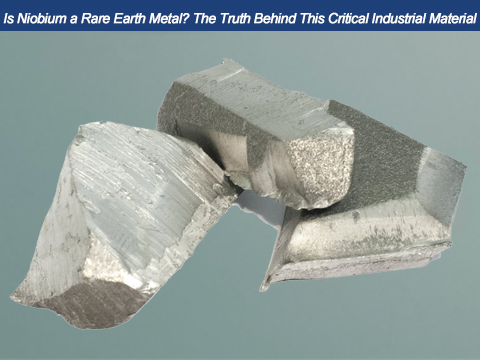
Niobium is a soft, gray, crystalline metal with the chemical symbol Nb and atomic number 41. It belongs to the transition metals, a large group of metallic elements located in the center of the periodic table.
The metal was first discovered in the early nineteenth century and has since become an important material in advanced manufacturing. Although niobium is not as well known as aluminum, copper, or titanium, it plays a critical role in modern industry.
One reason for its growing importance is its unique combination of properties. Niobium offers excellent corrosion resistance, high-temperature stability, good ductility, and superconducting capabilities at very low temperatures. These characteristics allow it to perform well in demanding environments where ordinary metals may fail.
Because of these advantages, niobium is widely used in steel production, aerospace components, superconducting magnets, electronics, and various specialized engineering applications.
When people ask, "is niobium a rare earth metal", they are often surprised to learn that niobium belongs to an entirely different category. While rare earth elements and niobium may both be considered strategic materials, their classification on the periodic table is not the same.
Niobium Property Snapshot
| Property | Value |
|---|---|
| Element Name | Niobium |
| Chemical Symbol | Nb |
| Atomic Number | 41 |
| Density | 8.57 g/cm³ |
| Melting Point | Approximately 2,468°C |
| Boiling Point | Approximately 4,927°C |
| Classification | Transition Metal |
Why Engineers Choose Niobium
Engineers value niobium because it can improve material performance without requiring large additions.
Some key benefits include:
- Excellent strength-to-weight enhancement
- Strong resistance to corrosion
- High melting point
- Good formability and weldability
- Superconducting properties at cryogenic temperatures
These benefits help manufacturers create stronger, lighter, and more reliable products across many industries.
Is Niobium a Rare Earth Metal?
Direct Answer
No, niobium is not a rare earth metal.
This is the most important takeaway for anyone searching the phrase "is niobium a rare earth metal".
While niobium is often mentioned alongside rare earth elements in discussions about critical minerals and strategic resources, it is scientifically classified as a transition metal rather than a rare earth element.
Understanding this distinction is important because the classification affects how materials are grouped, studied, sourced, and applied in industry.
Why Niobium Is Not Classified as a Rare Earth Element
Rare earth elements generally include the fifteen lanthanides on the periodic table. In many definitions, scandium and yttrium are also included because they share similar chemical characteristics.
The rare earth element group consists of:
- Lanthanum
- Cerium
- Praseodymium
- Neodymium
- Samarium
- Europium
- Gadolinium
- Terbium
- Dysprosium
- Holmium
- Erbium
- Thulium
- Ytterbium
- Lutetium
- Plus scandium and yttrium in many classifications
Niobium is not part of this family.
Instead, niobium belongs to Group 5 of the periodic table alongside vanadium and tantalum. This position places it firmly within the transition metals category.
Therefore, the answer to the question "is niobium a rare earth metal" remains clear: no, it is a transition metal.
Niobium vs. Rare Earth Elements
The following comparison highlights the differences.
| Feature | Niobium | Rare Earth Elements |
|---|---|---|
| Classification | Transition Metal | Lanthanides plus scandium and yttrium |
| Atomic Number | 41 | 21, 39, and 57–71 |
| Periodic Table Location | Group 5 | Primarily f-block |
| Main Uses | Steel, aerospace, superconductors | Magnets, batteries, electronics |
| Chemical Behavior | Transition metal chemistry | Rare earth chemistry |
Although both groups are important to modern technology, they serve different functions and possess different chemical properties.
Where Is Niobium Located on the Periodic Table?
A simple way to answer "is niobium a rare earth metal" is to look at its location on the periodic table.
Rare earth elements are typically found in the lanthanide series, which is displayed separately below the main body of the periodic table.
Niobium, however, appears in Group 5 among the transition metals. It sits between zirconium and molybdenum and shares characteristics with other refractory and high-performance metals.
This location confirms its classification as a transition metal rather than a rare earth element.
Why Do People Mistake Niobium for a Rare Earth Metal?
Many applications of rare earth elements are linked to high technology, and niobium is also widely utilized in high-tech sectors. Consequently, many non-specialists tend to classify it as a member of the rare earth family. Another contributing factor is that, within the mining and smelting supply chain, various elements frequently occur together. For instance, when mining tantalum-niobium deposits, the ore may also contain thorium, rare earth elements, tantalum, and other substances. This leads to the misconception that niobium is, in fact, a member of the rare earth group.
Niobium Is Often Discussed with Critical Minerals
In recent years, governments and industries around the world have focused heavily on critical minerals. These materials are essential for manufacturing, defense, infrastructure, and advanced technologies.
Niobium frequently appears on critical mineral lists because:
- Global production is concentrated in a few countries
- Industrial demand remains strong
- Substitutes are often less effective
- Supply disruptions could affect key industries
Because rare earth elements are also considered critical minerals, many people assume niobium belongs to the same category.
However, critical mineral status and rare earth classification are two completely different concepts.
A material can be critical without being a rare earth element.
Rare Earth Metal vs. Rare Metal vs. Critical Mineral
Understanding these terms helps eliminate confusion.
| Term | Meaning |
|---|---|
| Rare Earth Element | Specific group of elements including lanthanides, scandium, and yttrium |
| Rare Metal | Informal term often used for less common industrial metals |
| Critical Mineral | Material considered strategically important to industry and national economies |
Niobium can reasonably be described as a critical mineral and, in some contexts, a rare metal. However, it is not classified as a rare earth element.
This distinction is important because many purchasing decisions, regulations, and technical specifications rely on accurate material classifications.
The Real Source of the Confusion
Another reason people ask "is niobium a rare earth metal" is that niobium is relatively unfamiliar outside technical industries.
Unlike iron, copper, or aluminum, niobium is not commonly discussed in everyday life. When people encounter information about its strategic importance, limited production, and advanced applications, they naturally group it together with rare earth materials.
While niobium may share economic and strategic similarities with rare earth elements, it remains scientifically and technically a transition metal. The answer to "is niobium a rare earth metal" therefore remains unchanged: no, but it is one of the world's most important critical industrial metals.
What Makes Niobium So Valuable?
Many people begin their research by asking, "is niobium a rare earth metal?" However, after learning that niobium is actually a transition metal, the next question is usually: why is it so important?
The answer lies in its unique combination of physical and chemical properties. Few metals can match niobium's balance of strength, heat resistance, corrosion resistance, and formability. These characteristics allow manufacturers to improve product performance while using relatively small amounts of material.
For industries such as aerospace, energy, transportation, and advanced manufacturing, niobium offers significant performance benefits. In many cases, adding a very small amount of niobium can dramatically improve the properties of an alloy.
High Melting Point
Niobium has a melting point of approximately 2,468°C, making it suitable for high-temperature applications.
Materials exposed to extreme heat must maintain their strength and structural integrity. Niobium helps alloys withstand these conditions, making it valuable in aerospace engines, industrial furnaces, and other demanding environments.
Excellent Corrosion Resistance
Corrosion can shorten equipment life and increase maintenance costs. Niobium naturally forms a protective oxide layer that helps resist corrosion in many aggressive environments.
This property makes niobium attractive for chemical processing equipment, medical devices, and specialty industrial components.
Strong Yet Ductile
Many high-strength materials become difficult to shape or machine. Niobium offers a valuable balance between strength and ductility.
Manufacturers can form, weld, and fabricate niobium into various product forms while still benefiting from its performance characteristics.
Superconducting Properties
One of niobium's most remarkable features is its superconductivity at cryogenic temperatures.
Superconducting materials can conduct electricity with virtually no resistance under specific conditions. This property is critical in technologies such as MRI systems, particle accelerators, and advanced scientific research equipment.
Property-to-Application Table
| Property | Why It Matters | Typical Application |
|---|---|---|
| High melting point | Performs in extreme heat | Aerospace components |
| Corrosion resistance | Longer service life | Chemical processing equipment |
| Ductility | Easier fabrication | Precision components |
| High strength | Improved mechanical performance | Structural alloys |
| Superconductivity | Efficient electrical performance | MRI systems and research magnets |
These properties explain why niobium continues to gain importance across modern industries. While the answer to "is niobium a rare earth metal" is no, its industrial value rivals many materials that receive far more public attention.
Where Is Niobium Used Today?
Understanding where niobium is used helps explain why global demand remains strong. Although niobium is not a rare earth metal, it plays a vital role in numerous high-performance applications.
Steel and High-Strength Low-Alloy (HSLA) Steels

The largest market for niobium is steel production.
Industry estimates suggest that approximately 85% to 90% of global niobium consumption is used in iron and steel applications. This makes steelmaking by far the largest end-use sector.
One reason for this popularity is efficiency. Very small additions of niobium—sometimes only 0.03% to 0.05%—can significantly increase steel strength, toughness, and weldability.
These improved properties help manufacturers produce lighter and stronger structures while reducing material consumption.
Common applications include:
- Bridges
- Buildings
- Pipelines
- Rail systems
- Heavy equipment
- Automotive components
Aerospace Industry

Aircraft and aerospace systems require materials that perform under extreme conditions.
Niobium-containing alloys help improve:
- Heat resistance
- Structural strength
- Weight reduction
- Long-term reliability
These characteristics make niobium useful in aerospace engines and other high-performance components.
Superconducting Magnets

Niobium is one of the most important superconducting materials in the world.
Applications include:
- MRI scanners
- Particle accelerators
- Fusion research systems
- Scientific laboratories
Without niobium-based superconductors, many advanced medical and research technologies would not be possible.
Medical Applications

The medical industry values niobium for its corrosion resistance and biocompatibility.
Potential applications include:
- Medical implants
- Surgical devices
- Specialized medical components
Electronics and Advanced Technologies
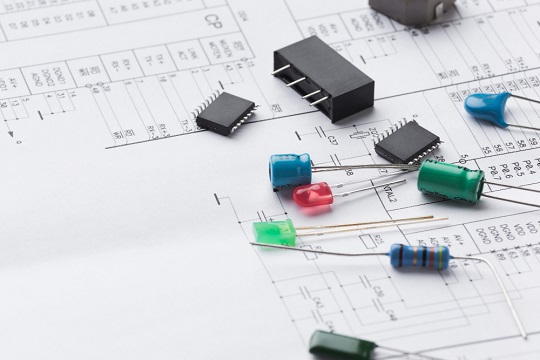
Niobium is also used in:
- Capacitors
- Electronic components
- Advanced research materials
- Emerging energy technologies
Major Niobium Applications by Sector
| Application Sector | Approximate Share |
|---|---|
| Steel and alloys | 85–90% |
| Superconductors | Small but strategic |
| Aerospace | Growing |
| Medical devices | Specialized |
| Electronics | Specialized |
These diverse applications demonstrate why niobium remains an essential industrial material despite not being classified as a rare earth element.
Global Niobium Supply: Why Buyers Pay Attention
When discussing whether niobium is a rare earth metal, another important topic often emerges: supply security.
Although niobium is not a rare earth metal, its supply chain shares some similarities with rare earth materials because production is concentrated in a limited number of regions.
Where Does Niobium Come From?
Brazil dominates global niobium production and possesses some of the world's largest known niobium reserves.
Canada is another important producer, although production volumes are significantly lower than Brazil's.
Because supply is concentrated, global manufacturers closely monitor developments in producing regions.
How Concentrated Is the Supply Chain?
Compared with common metals such as aluminum or copper, niobium production is relatively concentrated.
Industry sources report annual mining production ranging from approximately 50,000 to 97,000 tons, depending on market conditions and reporting methods.
This concentration means that disruptions in major producing regions can potentially affect global availability and pricing.
Why Supply Stability Matters
For manufacturers, stable supply is often just as important as material performance.
Purchasing teams typically evaluate:
- Long-term availability
- Supplier reliability
- Production capacity
- Delivery consistency
- Traceability
Companies that depend on niobium-containing materials often seek trusted suppliers to reduce supply-chain risks.
Global Supply Overview
| Factor | Details |
|---|---|
| Largest producer | Brazil |
| Important secondary producer | Canada |
| Annual mining production | Approximately 50,000–97,000 tons |
| Market importance | Strategic industrial material |
| Supply concentration | Relatively high |
As demand for advanced materials continues to grow, supply-chain management will remain an important consideration for niobium buyers worldwide.
Frequently Asked Questions About Niobium
Is niobium a rare earth metal?
No. Niobium is a transition metal with atomic number 41. It is not classified as a rare earth element.
What kind of metal is niobium?
Niobium is a refractory transition metal known for its high melting point, corrosion resistance, ductility, and superconducting properties.
Why is niobium important in steel?
Small additions of niobium can significantly improve steel strength, toughness, and weldability while reducing overall material usage.
Is niobium considered a critical mineral?
Yes. Many governments and industries consider niobium a critical mineral because of its strategic importance and concentrated global supply.
Where is most niobium mined?
Most global niobium production comes from Brazil. Canada is also an important producer.
Is niobium expensive?
Niobium is generally more expensive than common metals such as steel or aluminum. However, because only small amounts are often required, it can provide excellent value in performance-critical applications.
What industries use niobium?
Industries that use niobium include steel manufacturing, aerospace, medical technology, electronics, energy, and scientific research.
Can niobium replace rare earth elements?
Generally, no. Niobium and rare earth elements have different chemical properties and serve different functions in industrial applications.
Conclusion
So, is niobium a rare earth metal?
The answer is clear: no.
Niobium is a transition metal, not a rare earth element. While it is often discussed alongside rare earth materials because of its strategic importance and concentrated supply chain, its scientific classification is entirely different.
However, this distinction should not diminish niobium's importance. In fact, niobium is one of the most valuable specialty metals used in modern industry. Its ability to improve steel strength, resist corrosion, perform at high temperatures, and support superconducting technologies has made it indispensable across many sectors.
For engineers, purchasing managers, and manufacturers, understanding the answer to "is niobium a rare earth metal" is more than a matter of classification. It helps support informed sourcing decisions, accurate material selection, and better long-term supply planning.
Whether used in advanced alloys, superconducting magnets, aerospace systems, or specialized industrial components, niobium continues to play a critical role in modern manufacturing.
For manufacturers sourcing niobium materials, choosing a supplier with specialized experience can make the procurement process more efficient. SIZEN LIMITED is a B2B-focused supplier specializing in tantalum and niobium products for industrial customers. Contact SIZEN LIMITED and we help ensure consistent quality, customization, and dependable supply.
Recent News
- Niobium vs Titanium: A Practical Material Selection Guide
- ASTM B708 Tantalum: Grades, Requirements & Buying Guide
- Niobium Ring Explained: Benefits, Applications and Sourcing Guide
- Tantalum Atomic Mass: What It Is and Why It Matters for Industrial Applications
- Niobium Density: How It Affects Material Performance and Design
- Tantalum Watch: Why This Rare Metal Is Becoming a Luxury Watchmaking Favorite
- Niobium Melting Point Explained: Properties, Comparisons, and Industrial Uses
- Tantalum Melting Point: Why 3,017°C Makes It One of the Most Valuable Refractory Metals
- Tantalum Density Explained: Why This Heavy Metal Matters
- Tantalum Hafnium Carbide (Ta₄HfC₅): The Ultra-High-Temperature Material Behind Advanced Engineering