
Is Niobium Magnetic? Magnetic Properties, Superconductivity, and Uses
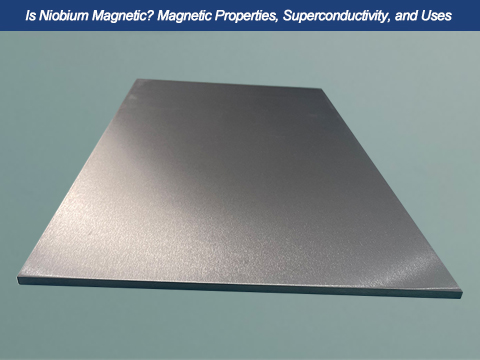
Niobium is not strongly magnetic like iron or nickel. Instead, it is classified as a paramagnetic metal, meaning it only reacts weakly to magnetic fields. However, niobium becomes much more interesting at extremely low temperatures. This is because it turns into a superconductor below 9.2 K. This unique behavior makes niobium valuable in MRI systems and particle accelerators. It is also essential for aerospace alloys and advanced scientific equipment.
Here are the key facts about niobium magnetic behavior:
| Property | Niobium Behavior |
|---|---|
| Magnetic type | Paramagnetic |
| Strongly magnetic? | No |
| Retains magnetism? | No |
| Superconducting temperature | 9.2 K |
| Common superconducting uses | MRI, NMR, particle accelerators |
| Common product forms | Sheets, rods, bars, plates, wires |
Industrial buyers, engineers, and manufacturers must understand if niobium is magnetic. This answer is important because magnetic behavior impacts material selection. It also directly affects system performance and overall application suitability.
Is Niobium Magnetic?
The short answer is yes, but only weakly. If you are asking "is niobium magnetic," the correct scientific answer is that niobium is paramagnetic rather than ferromagnetic. This means niobium reacts slightly to magnetic fields, but it is not strongly magnetic like iron, cobalt, or nickel.
Niobium is a transition metal that, under standard temperature and pressure conditions, primarily exhibits paramagnetic properties. In the absence of an external magnetic field, it displays no magnetism. However, when subjected to low-temperature environments—such as at the temperature of liquid nitrogen—or when placed under the influence of an applied external magnetic field, it becomes weakly magnetized; moreover, the direction of this magnetization aligns with that of the external field. Nevertheless, this magnetization effect is extremely faint—far weaker than that observed in ferromagnetic or ferrimagnetic substances.
Unlike ferromagnetic metals, niobium does not keep magnetism after the magnetic field is removed. In practical terms, this means a niobium rod or niobium sheet will not behave like a common magnet. Most people would consider niobium to be essentially non-magnetic in daily industrial use.
However, the magnetic behavior of niobium changes dramatically under cryogenic conditions. When cooled below 9.2 K, niobium becomes superconducting. At this temperature, niobium can conduct electricity with almost zero resistance. It also interacts with magnetic fields in unique ways. Because of this property, niobium is widely used in superconducting magnets and advanced scientific equipment.
Many engineers and buyers search for "is niobium magnetic" for a specific reason. Magnetic performance is a critical factor in several high-tech industries. These include aerospace, electronics, energy, and medical manufacturing. For example, some systems require materials that won't interfere with magnetic fields. Others specifically depend on the metal's superconducting abilities.
Key facts about niobium magnetic behavior include:
- Niobium is paramagnetic
- It is not strongly magnetic
- It does not permanently retain magnetism
- It becomes superconducting below 9.2 K
- It is important in high-field magnetic systems
Niobium maintains a unique balance between weak magnetism and superconductivity. Because of this, it has become an important material in advanced engineering.
What Does Paramagnetic Mean?
To better understand the answer to "is niobium magnetic," it is important to know what paramagnetic means.
A paramagnetic material is weakly attracted to magnetic fields, but only while the magnetic field is present. Once the field is removed, the material does not keep any magnetism. This is very different from ferromagnetic metals like iron. Ferromagnetic metals can become permanently magnetized.
The table below shows the difference:
| Material Type | Example | Magnetic Strength |
|---|---|---|
| Ferromagnetic | Iron | Strong |
| Paramagnetic | Niobium | Weak |
| Diamagnetic | Copper | Very weak repulsion |
So, when people ask "is niobium magnetic," the practical answer is that niobium has only a weak magnetic response at room temperature. It will not behave like a typical magnet in industrial or daily use.
This weak magnetic behavior is useful in some advanced applications. It helps reduce magnetic interference while still providing excellent heat resistance, corrosion resistance, and mechanical performance.
Is Niobium Magnetic at Room Temperature?
One of the most common questions is: "is niobium magnetic at room temperature?"
The simple answer is no. Niobium is not strongly magnetic at normal temperatures. It is generally treated as a non-magnetic material in most industrial uses.
At room temperature, niobium is a paramagnetic metal. It only shows a very weak attraction to magnetic fields. This effect is so small that it is usually not noticeable during normal handling or manufacturing.
For example, if you place a strong magnet near a niobium plate or niobium wire, the attraction is extremely weak. It is much weaker than what you would see with iron or nickel. Because of this, many industries treat niobium as non-magnetic in practice.
This property is very useful in sensitive environments. In electronics and medical systems, strong magnetic materials can cause interference. Niobium helps reduce this risk because its magnetic response is minimal.
Temperature also has a major impact on niobium behavior. At room temperature, it is only weakly magnetic. But at extremely low temperatures, below 9.2 K, it becomes superconducting. In this state, its interaction with magnetic fields changes completely.
This is why the question "is niobium magnetic" is important in engineering. The material behaves differently depending on the temperature. Engineers must consider both conditions when selecting materials.
Another important point is that niobium does not keep magnetism. Even after being exposed to a magnetic field, it does not stay magnetized. This helps ensure stable performance in precision systems and avoids unwanted magnetic effects.
Because of these characteristics, niobium is widely used in:
- Scientific instruments
- Superconducting systems
- Medical imaging equipment
- Aerospace components
- High-performance electronics
Overall, niobium combines weak room-temperature magnetism with powerful superconducting behavior at low temperatures. This unique combination makes it a valuable material in advanced industries.
How Niobium Behaves in Superconducting Applications
The most important part of the question "is niobium magnetic" appears at very low temperatures.
Niobium becomes superconducting below 9.2 K. This is its critical temperature. At this point, niobium changes its behavior completely. It loses almost all electrical resistance. It also shows unique magnetic properties.
This is one of the main reasons niobium is so valuable in advanced industries.
In a superconducting state, niobium can carry very high electrical currents. It does this without energy loss. At the same time, it interacts with magnetic fields in a special way. This allows engineers to build very strong and stable magnetic systems.
These systems are used in science and medicine.
Here are the key applications:
| Application | Why Niobium Is Used |
|---|---|
| MRI systems | Strong superconducting magnets |
| NMR instruments | Stable high-field performance |
| Particle accelerators | High magnetic field generation |
| Quantum research | Advanced superconducting properties |
| Fusion research | Efficient magnetic confinement systems |
Niobium is also used in important alloys. Two common examples are niobium-titanium (NbTi) and niobium-tin (Nb3Sn). These materials are widely used in superconducting magnets.
MRI machines are one of the best-known uses. They rely on niobium-based superconductors to generate strong and stable magnetic fields. Without niobium, these systems would need much more energy and would be less efficient.
Particle accelerators also depend heavily on niobium. Research facilities use niobium superconducting cavities and magnets. These help control particle beams with very high precision.
Because of its superconducting properties, niobium is a key material in scientific research, medical imaging, aerospace engineering, and energy technology.
For industrial buyers, this also means demand for high-purity niobium is increasing. Superconducting applications require strict purity control, precise dimensions, and stable material quality.
Niobium vs Tantalum: Magnetic and Performance Differences
When discussing "is niobium magnetic," many buyers also compare niobium with tantalum. This is because both are high-performance specialty metals.
Both niobium and tantalum are paramagnetic, meaning neither is strongly magnetic like iron. However, niobium is much more important in superconducting applications. This is because it becomes superconducting below 9.2 K.
| Property | Niobium | Tantalum |
|---|---|---|
| Magnetic behavior | Paramagnetic | Paramagnetic |
| Superconductivity | Excellent | Limited |
| Corrosion resistance | High | Extremely high |
| Common applications | MRI, aerospace, superconductors | Chemical processing, electronics |
Niobium is widely used in MRI systems, particle accelerators, and superconducting technologies. Tantalum is better known for corrosion-resistant equipment and capacitor applications.
SIZEN LIMITED supplies both niobium and tantalum products. It provides custom forms such as sheets, rods, plates, bars, and wires for industrial applications.
Where Is Niobium Used in Industry?

The question "is niobium magnetic" is closely connected to industrial performance. This is because magnetic behavior affects how the metal functions in advanced systems. Today, niobium is used across many industries. This is due to its unique combination of physical properties. It offers strength, heat resistance, and corrosion resistance. Most importantly, it provides powerful superconductivity.
One major industry that uses niobium is aerospace. Niobium-containing alloys help aircraft engines and aerospace components operate under extremely high temperatures. The metal improves mechanical strength while maintaining relatively low weight. This makes it valuable for demanding aerospace environments.
The medical industry also depends heavily on niobium. MRI machines use superconducting niobium-based magnets to create detailed medical images. Niobium becomes superconducting at low temperatures. Thanks to this reason, it enables stable and efficient magnetic field generation.
Electronics and semiconductor industries use niobium in specialized components. In these applications, electrical performance and stability are important. Niobium's weak magnetic response can help reduce interference in sensitive systems.
Scientific research is another major market. Many advanced fields require high-purity niobium for superconductivity. Key examples include particle accelerators and research laboratories. Quantum computing projects also depend on this high-purity material.
The following table shows common industrial uses:
| Industry | Typical Niobium Application |
|---|---|
| Aerospace | High-temperature alloys |
| Medical | MRI superconducting magnets |
| Electronics | Specialized components |
| Research | Particle accelerators |
| Energy | Advanced superconducting systems |
| Chemical processing | Corrosion-resistant equipment |
Niobium is also used in steel production. Small additions of niobium can improve the strength and toughness of structural steels. These steel can be used in pipelines, bridges, and construction equipment.
As industries continue developing more advanced technologies, demand for niobium continues to increase. This is especially true in fields requiring lightweight materials, superconducting performance, and high-temperature stability.
For industrial buyers, understanding where niobium is used is important. It helps determine which material form, purity level, and specification are most suitable for a project.
What Niobium Product Forms Are Available?
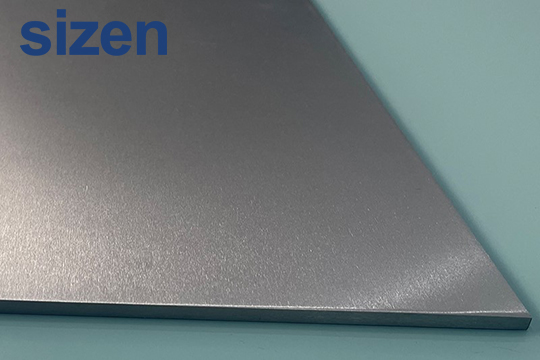
Niobium is available in several product forms for different industrial applications. It's especially useful in aerospace, electronics, superconducting systems, and research equipment.
Common niobium products include:
| Product Form | Common Uses |
|---|---|
| Niobium sheet | Heat shields, fabrication |
| Niobium plate | Structural components |
| Niobium rod | Machining and industrial parts |
| Niobium bar | High-strength applications |
| Niobium wire | Superconducting systems |
| Custom niobium parts | Specialized equipment |
Niobium wire is widely used in MRI systems, research magnets, and particle accelerators. This is due to its superconducting properties. Sheets, plates, rods, and bars are commonly used in high-temperature and corrosion-resistant applications.
SIZEN LIMITED supplies niobium sheets, plates, rods, bars, wires, and custom-machined components for various industrial needs.
How to Choose the Right Niobium Grade or Form
Choosing the right niobium material depends on the application, operating environment, and performance requirements. Besides asking "is niobium magnetic," buyers should also consider purity, temperature resistance, corrosion resistance, and fabrication needs.
Different niobium forms are suited for different uses:
| Application | Recommended Niobium Form |
|---|---|
| Superconducting magnets | Niobium wire |
| Aerospace structures | Niobium sheet or plate |
| Precision machining | Niobium rod |
| Research equipment | High-purity niobium |
| Corrosion-resistant systems | Custom niobium components |
High-purity niobium is especially important for superconducting applications. This is because impurities can affect electrical and magnetic performance. For high-temperature or corrosive environments, buyers should also evaluate strength, heat resistance, and long-term durability.
SIZEN LIMITED supplies niobium sheets, rods, bars, plates, wires, and custom solutions for industrial applications. Choosing the correct niobium grade and form can help improve manufacturing efficiency and overall system performance.
Frequently Asked Questions About Niobium Magnetism
Is niobium magnetic?
Yes, niobium is magnetic in a weak sense because it is paramagnetic. However, it is not strongly magnetic like iron or nickel.
Is niobium ferromagnetic?
No. Niobium is not ferromagnetic. It does not retain magnetism after a magnetic field is removed.
Is niobium magnetic at room temperature?
At room temperature, niobium is only weakly magnetic and is generally treated as a non-magnetic material in practical applications.
Why is niobium used in MRI machines?
Niobium becomes superconducting below 9.2 K. This property allows MRI systems to generate strong and stable magnetic fields efficiently.
What is the superconducting temperature of niobium?
Niobium becomes superconducting below 9.2 K, also called its critical temperature.
Conclusion
So, is niobium magnetic? The answer is yes, but only very weakly. Niobium is a paramagnetic metal. It does not show strong permanent magnetism like iron. Its response to magnetic fields is small and temporary.
What makes niobium special is its superconducting behavior. Below 9.2 K, niobium becomes superconducting. It plays an important role in MRI systems, particle accelerators, research equipment, and advanced energy technologies.
Niobium combines several important properties. It has weak room-temperature magnetism. It also has excellent heat resistance and corrosion resistance. In addition, it offers superconducting performance at low temperatures. Because of this, niobium is widely used in modern high-tech industries.
Today, niobium is used in aerospace, electronics, medical technology, superconducting systems, and scientific research. It is available in many product forms, including sheets, plates, rods, bars, wires, and custom components. These forms support different industrial requirements.
For engineers, manufacturers, and procurement teams, understanding niobium magnetic behavior helps in selecting the right material for demanding applications. As demand for high-performance materials continues to grow, niobium will remain an important material in advanced industries.
SIZEN LIMITED supplies high-quality niobium products for industrial and research applications. Our product range includes niobium sheets, plates, rods, bars, wires, and custom-machined components. We support applications in superconducting systems, aerospace projects, electronics, and high-temperature environments. Please feel free to contact us for product details, technical support, or a customized quotation.
Recent News
- Niobium vs Titanium: A Practical Material Selection Guide
- ASTM B708 Tantalum: Grades, Requirements & Buying Guide
- Niobium Ring Explained: Benefits, Applications and Sourcing Guide
- Tantalum Atomic Mass: What It Is and Why It Matters for Industrial Applications
- Niobium Density: How It Affects Material Performance and Design
- Tantalum Watch: Why This Rare Metal Is Becoming a Luxury Watchmaking Favorite
- Niobium Melting Point Explained: Properties, Comparisons, and Industrial Uses
- Tantalum Melting Point: Why 3,017°C Makes It One of the Most Valuable Refractory Metals
- Tantalum Density Explained: Why This Heavy Metal Matters
- Tantalum Hafnium Carbide (Ta₄HfC₅): The Ultra-High-Temperature Material Behind Advanced Engineering