
Why Machining Tantalum Is Difficult—and How to Do It Right
Quick Facts About Machining Tantalum
| Factor | Key Insight |
|---|---|
| Melting Point | ~3,017°C |
| Machining Behavior | Soft like copper, but difficult like titanium |
| Turning Speed | 100–175 SFM |
| Drilling Speed | ~80 SFM (with pecking) |
| Best Material Condition | Unannealed tantalum |
| Critical Requirement | Heavy flood lubrication |
Key takeaway:
Machining tantalum is challenging because the material is soft, sticky, and prone to work hardening. However, with the right tools, speeds, and lubrication, you can achieve clean cuts, stable processes, and high-quality parts.
What Is Tantalum and Why Is It Machined?
What Makes Tantalum Unique?
Tantalum is a rare metal known for its excellent resistance to corrosion and very high melting point of about 3,017°C. It does not react easily with most chemicals, which makes it highly valuable in harsh environments. In simple terms, tantalum is a metal that can survive where many other materials fail.
Another key property of tantalum is its biocompatibility. This means it can safely be used inside the human body without causing harmful reactions. Because of this, it is widely used in medical implants and surgical tools. It also has good electrical properties, which makes it useful in electronics.
Why Industries Choose Machined Tantalum Parts
Industries choose machining tantalum because they need precise, custom components that cannot be made using standard shapes. Raw tantalum usually comes in forms like rods, sheets, or bars. These must be machined into final parts with tight tolerances.
For example, in aerospace, tantalum is used for parts that must handle high heat and stress. In chemical processing, it is used for equipment that must resist strong acids. In medical applications, it is used for implants that require both strength and safety.
Machining tantalum allows manufacturers to create parts that meet exact design requirements. Without machining, these industries would not be able to fully use the unique properties of this metal.
Why Tantalum Is Difficult to Machine
Material Behavior During Cutting
Machining tantalum is often described as similar to machining copper, but with the added difficulty of titanium. This means the material feels soft, yet behaves unpredictably during cutting.
One major issue is that tantalum tends to stick to cutting tools. This sticking effect is known as galling. When galling happens, the material can tear instead of cutting cleanly. This leads to poor surface finish and damaged parts.
Another challenge is work hardening. When machining tantalum, the surface can become harder as it is cut. This makes further cutting more difficult and increases tool wear.
Common Machining Challenges Explained
| Problem | Cause | Impact |
|---|---|---|
| Galling | Metal sticks to tool | Rough surface |
| Work hardening | Improper cutting | Tool wear increases |
| Tearing | Low speed or dull tools | Scrap parts |
| Smearing | Excess heat | Poor finish |
These challenges mean that machining tantalum requires careful control of every parameter. If the setup is not correct, problems appear quickly. For example, using a dull tool can increase heat, which leads to smearing and tearing.
In short, machining tantalum is difficult because the material reacts strongly to poor machining conditions. However, with the right approach, these problems can be controlled.
Best Tantalum Forms for Machining
Annealed vs. Unannealed Tantalum
The condition of the material plays a major role in machining tantalum. Tantalum is often supplied in either annealed or unannealed form.
Annealed tantalum is softer and more ductile. While this may seem beneficial, it actually makes machining more difficult. The material becomes more likely to stick, smear, and tear.
Unannealed tantalum, on the other hand, is slightly harder. This added hardness helps reduce galling and improves cutting performance.
| Condition | Machinability | Recommendation |
|---|---|---|
| Annealed | Poor | Avoid if possible |
| Unannealed | Better | Preferred |
Choosing the Right Material Form
Tantalum is available in several forms, including:
- Bars
- Rods
- Sheets
- Tubes
- Wires
Each form is used for different applications. For example, rods and bars are often used for turning operations, while sheets are used for cutting and forming.
Choosing the right form before machining is very important. It reduces waste, lowers machining time, and improves final quality.
For companies like SIZEN LIMITED, providing the correct material form and condition is a key advantage. When customers start with the right tantalum stock, machining becomes easier and more cost-effective.
Tools, Speeds, and Coolants
Recommended Cutting Tools
When machining tantalum, tool selection is critical. Carbide tools are commonly used because they can handle heat and maintain sharp edges. Ceramic tools can also be used in some cases.
Sharp tools are essential. A dull tool increases friction and heat, which leads to tearing and poor surface finish.
Optimal Cutting Speeds and Feeds
Cutting speed must be carefully controlled. If the speed is too low, the material may tear instead of cutting smoothly. If it is too high, excessive heat may build up.
Typical ranges include:
- Turning: 100–175 SFM
- Drilling: around 80 SFM
Why Coolant Strategy Is Critical
Coolant plays a major role in machining tantalum. Without proper cooling, the material can stick to the tool and cause damage.
| Operation | Speed | Tool | Coolant |
|---|---|---|---|
| Turning | 100–175 SFM | Carbide | Flood coolant |
| Drilling | ~80 SFM | Carbide drill | Continuous lubrication |
Do:
- Use sharp tools
- Apply heavy coolant
- Maintain steady feed
Don't:
- Use dull tools
- Run too slow
- Skip lubrication
In machining tantalum, coolant is not optional. It is essential for preventing defects and ensuring stable performance.
Common Machining Operations
Turning
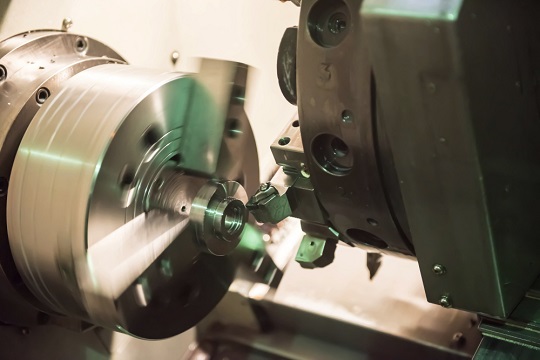
Turning is one of the most widely used processes in machining tantalum, especially for producing cylindrical parts such as rods, shafts, and precision components. However, due to tantalum's soft and sticky nature, this operation requires careful control.
To achieve good results in machining tantalum during turning:
- Use sharp carbide inserts with a positive rake angle to reduce cutting force
- Maintain a steady and moderate feed rate to avoid rubbing
- Keep the tool continuously engaged with the material to prevent work hardening
- Apply heavy flood coolant directly at the cutting zone
It is also important to avoid stopping and restarting the cut frequently, as this can lead to surface hardening and inconsistent finishes.
Common issue:
If the cutting speed is too low or the tool is dull, the material may tear instead of cut cleanly, resulting in a rough surface and possible scrap.
Drilling
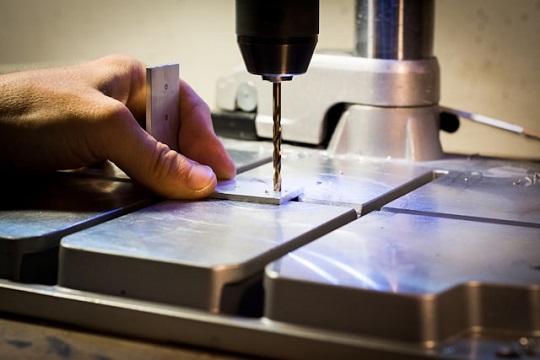
Drilling is more challenging in machining tantalum because chips tend to stick and clog the drill flutes. This can quickly lead to overheating and tool failure if not handled correctly.
Best practices for drilling tantalum include:
- Use high-quality carbide drills for better heat resistance
- Apply peck drilling cycles to break chips and clear them regularly
- Maintain constant and sufficient lubrication throughout the process
- Ensure proper alignment to avoid tool deflection
Peck drilling is especially important because it prevents chip buildup, which is a common problem when machining tantalum.
Common issue:
If the drill rubs instead of cutting, it can cause rapid work hardening, making the material much harder to machine and increasing tool wear.
Milling
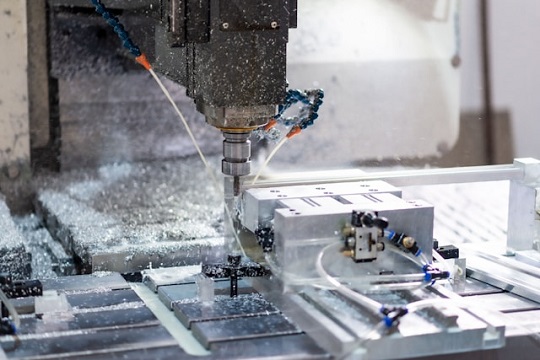
Milling in machining tantalum requires a rigid setup and careful chip control. Because the material can smear and stick, poor chip evacuation can quickly lead to overheating and surface damage.
To improve milling performance:
- Use rigid machines and stable fixtures to minimize vibration
- Select sharp end mills with appropriate coatings
- Maintain proper cutting speeds and feed rates to ensure clean cuts
- Ensure effective chip evacuation, using air blast or coolant
It is also helpful to use climb milling where possible, as it can improve surface finish and reduce cutting forces.
Common issue:
If chips are not removed properly, they can re-cut into the surface, causing heat buildup, tool wear, and poor surface quality.
Threading

Threading tantalum is a delicate operation because the material can easily deform or tear under stress. Both internal and external threading require precision and proper technique.
Recommended practices include:
- Perform threading on a lathe rather than using a die, for better control
- Use sharp, high-quality threading tools
- Apply ample lubrication to reduce friction and heat
- Use slow and steady cutting speeds to maintain accuracy
Single-point threading is often preferred because it allows better control over cutting conditions and reduces the risk of damage.
Common issue:
If lubrication is insufficient or the tool is not sharp, threads may tear or deform, leading to poor fit and reduced part quality.
Industry Applications

Aerospace Components
In aerospace, machining tantalum is used to create parts that can handle extreme heat and stress. These include fasteners, heat shields, and engine components.
Medical and Biocompatible Parts
Tantalum is widely used in medical implants because it is safe for the human body. Machined parts include bone implants and surgical devices.
Chemical Processing Equipment
Tantalum resists corrosion from strong acids. This makes it ideal for chemical equipment such as reactors and heat exchangers.
Electronics and Energy Systems
In electronics, tantalum is used in capacitors and high-performance components. Machining tantalum ensures precise dimensions and reliable performance.
Across all these industries, machining tantalum enables high-performance solutions where failure is not acceptable.
When to Use Additive Manufacturing
Benefits of Additive Manufacturing
Additive manufacturing allows complex shapes to be created without cutting away material. This reduces waste and enables designs that are difficult to machine.
When Machining Is Still Better
| Method | Advantage | Limitation |
|---|---|---|
| Machining | High precision | Material waste |
| Additive | Complex shapes | Lower surface quality |
Machining tantalum is still the best choice when tight tolerances and smooth surfaces are required. Additive methods are useful for complex internal structures.
How to Specify Tantalum for Your Project
Key Specifications to Include
When ordering tantalum for machining, it is important to provide clear specifications:
- Material grade
- Condition (annealed or unannealed)
- Dimensions
- Tolerance
- Surface finish
How Material Choice Impacts Cost
Choosing the right material reduces machining difficulty and lowers cost. For example, selecting unannealed tantalum can reduce tool wear and improve efficiency.
Working with an experienced supplier like SIZEN LIMITED helps ensure the correct material is selected from the start. This reduces errors and improves overall project success.
FAQ about Machining Tantalum
What makes machining tantalum difficult?
Machining tantalum is difficult because the material is soft, sticky, and prone to work hardening. This leads to tool wear, galling, and surface defects if not handled properly.
Is annealed or unannealed tantalum better?
Unannealed tantalum is generally better for machining because it is slightly harder and less likely to stick to cutting tools.
What tools are best for machining tantalum?
Sharp carbide tools are commonly used because they resist heat and maintain cutting performance.
What coolant should be used?
Heavy flood coolant or continuous lubrication is essential to reduce heat and prevent galling.
Which industries use machined tantalum parts?
Aerospace, medical, chemical processing, and electronics industries all rely on machined tantalum components.
When should additive manufacturing be used?
Additive manufacturing is best for complex shapes and internal structures, while machining is preferred for precision and surface quality.
Conclusion: Mastering Machining Tantalum Starts with the Right Approach
Machining tantalum is not easy, but it is completely achievable with the right knowledge and preparation. Throughout this guide, we have seen that the key challenges—galling, work hardening, and surface tearing—can be controlled by choosing the correct tools, using proper cutting speeds, and applying heavy, continuous lubrication. Just as important, selecting the right material condition, especially unannealed tantalum, can make a significant difference in machining performance.
In addition, understanding how different machining operations behave, from turning and drilling to milling and threading, helps reduce defects and improve consistency. For many industries such as aerospace, medical, and chemical processing, machining tantalum is essential to produce high-performance components that can operate in extreme environments.
However, successful machining tantalum does not start at the machine—it starts with the material. Choosing the right tantalum grade, form, and condition early in the process can reduce tool wear, lower costs, and improve final part quality.
This is where SIZEN LIMITED can support your project. As a professional supplier of high-purity tantalum products, SIZEN LIMITED provides a wide range of forms, including rods, bars, sheets, tubes, and custom materials tailored to your exact requirements. Whether you need small quantities for research or large-scale production supply, our team can help you select the most suitable material for better machinability and performance.
If you are planning a project involving machining tantalum, we welcome you to reach out to SIZEN LIMITED. Our experts are ready to provide material guidance, custom solutions, and reliable support to help you achieve better results from start to finish.
Recent News
- Niobium vs Titanium: A Practical Material Selection Guide
- ASTM B708 Tantalum: Grades, Requirements & Buying Guide
- Niobium Ring Explained: Benefits, Applications and Sourcing Guide
- Tantalum Atomic Mass: What It Is and Why It Matters for Industrial Applications
- Niobium Density: How It Affects Material Performance and Design
- Tantalum Watch: Why This Rare Metal Is Becoming a Luxury Watchmaking Favorite
- Niobium Melting Point Explained: Properties, Comparisons, and Industrial Uses
- Tantalum Melting Point: Why 3,017°C Makes It One of the Most Valuable Refractory Metals
- Tantalum Density Explained: Why This Heavy Metal Matters
- Tantalum Hafnium Carbide (Ta₄HfC₅): The Ultra-High-Temperature Material Behind Advanced Engineering