
Tantalum Capacitor Shortage in 2026: Causes, Risks, and Smart Sourcing Strategies
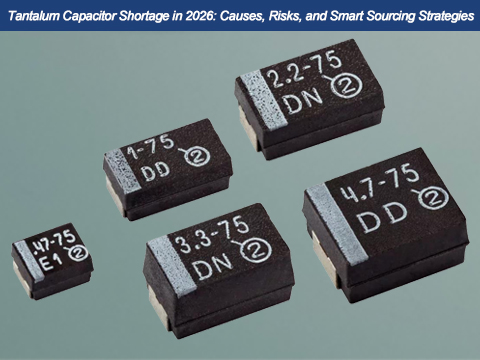
Tantalum Capacitor Shortage: Key Facts at a Glance
The global shortage of tantalum capacitors is becoming a serious problem. It is currently impacting electronics manufacturers and OEMs. It also creates major challenges for procurement teams and design engineers. Several factors are impacting the electronics industry. Supply disruptions, rising AI infrastructure demand, and geopolitical risks are all playing a role. Together, these forces are pushing prices higher and extending lead times.
Here are some of the most important facts about the current tantalum capacitor shortage:
| Metric | Current Situation | Why It Matters |
|---|---|---|
| Typical lead times | 20–52 weeks | Delays production schedules |
| Tantalum price trend | Up 40–60% in some markets | Increases BOM costs |
| Main supply regions | DRC and Rwanda | Creates geographic risk |
| Fast-growing demand sectors | AI servers, automotive, medical devices | Intensifies competition |
| Supply chain challenge | Limited refining capacity | Restricts material availability |
Many companies depend on a stable supply of tantalum. For these businesses, early sourcing planning is now essential. Building strong supplier relationships has also become more important than ever.
Industries needing high-reliability capacitors face a tough challenge right now. This includes the automotive and aerospace sectors. It also impacts medical devices, telecommunications, and industrial controls. All of these fields depend on tantalum capacitors to function. These capacitors are highly valued for several reasons. They are known for their compact size and stable electrical performance. Additionally, they offer strong reliability in demanding environments.
SIZEN LIMITED works with industrial customers worldwide. The company supplies high-purity tantalum and niobium materials. It provides custom machined components and flexible manufacturing support. The current supply environment is quite unstable. In this context, experienced refractory metal suppliers can be a major asset. They help customers reduce sourcing risks and improve overall supply-chain stability.
What Is Driving the Tantalum Capacitor Shortage?
The tantalum capacitor shortage did not happen because of a single event. Instead, several supply-chain pressures developed at the same time. Several factors are tightening the global tantalum supply chain. These include mining disruptions and strong demand from the electronics sector. Additionally, refining bottlenecks and geopolitical instability are making the situation more difficult.
The result is a challenging market. Material availability is limited, and capacitor manufacturers are facing rising pressure.
Mining Disruptions and Raw Material Constraints
Tantalum is a relatively rare metal. Most tantalum production comes from a small number of mining regions. The core production capacity for global tantalum resources is concentrated in Central Africa. Countries such as the Democratic Republic of Congo and Rwanda play major roles in global tantalum supply.
Key local tantalum mines have completely halted operations. This follows several safety-related incidents. These closures have resulted in a significant global supply deficit. Furthermore, it is currently uncertain when production will resume.
Lead times from major international manufacturers have extended substantially. Vishay (USA) now faces lead times exceeding 20 weeks. AVX (Japan) has seen its delivery cycle stretch from 26 to 38 weeks. Inventory levels for Panasonic's low-voltage series have dwindled to just 15 days' supply. The gap between supply and demand continues to widen.
AI and Data Center Demand Is Rising Fast
Another major reason for the tantalum capacitor shortage is the rapid growth of AI infrastructure and data centers.
AI servers have emerged as a primary driver of new demand for tantalum capacitors. A single AI server utilizes more than ten times the number of tantalum capacitors found in a traditional server. A single GB300 NVL72 cabinet requires approximately 21,000 tantalum capacitors.
In 2024, the global tantalum capacitor market is projected to reach a size of approximately $2.432 billion. AI servers alone expected to fuel a 21% growth rate for the industry. The tantalum capacitor market is seeing a significant boost. This is tied to projections that NVIDIA will ship 80,000 cabinets by 2026. As a result, the incremental market for these capacitors is expected to hit $500 million.
Demand for tantalum capacitors is rising across multiple fields. Electric vehicles and medical electronics are lead drivers. Aerospace and industrial automation are also using these components more frequently. This is creating stronger competition for available supply.
AI infrastructure is a major driver of tantalum capacitor demand. High-performance servers require capacitors that are both compact and reliable. These components are essential because they can operate effectively under heavy electrical loads.
Long Refining and Processing Cycles
The tantalum capacitor shortage is also linked to limited refining and processing capacity.
Producing high-purity tantalum metal is not simple. The refining process requires specialized equipment, technical expertise, and strict quality control. Few companies in the world can refine tantalum to a high enough standard. Advanced electronic applications require extreme purity levels. Very few suppliers are capable of meeting these strict requirements.
The refining process is only the first step. Tantalum powders and capacitor-grade materials still need additional processing. They must also undergo qualification before they can finally enter production.
These long production cycles reduce flexibility across the supply chain. When demand suddenly increases, suppliers cannot expand output immediately. This creates long lead times and material allocation issues.
This situation impacts both OEMs and procurement managers. For these teams, sourcing tantalum materials now requires long-term planning. It is no longer a matter of making simple, short-term purchasing decisions.
How the Tantalum Capacitor Shortage Affects OEMs and Manufacturers
The tantalum capacitor shortage is a global issue. It is creating serious operational challenges for electronics manufacturers. OEMs, contract manufacturers, and procurement teams are all feeling the impact. They are currently dealing with longer lead times and higher costs. This has led to growing uncertainty in their supply planning.
Many companies are now facing difficult choices to keep their lines running. Some are forced to redesign their products or qualify alternative suppliers. Others are choosing to increase their inventory levels to avoid production delays.
The shortage is especially difficult for manufacturers that depend on stable delivery schedules. A single capacitor shortage can delay the shipment of an entire electronic system.
| Challenge | Business Impact | Recommended Action |
|---|---|---|
| Longer lead times | Delayed production schedules | Qualify multiple suppliers |
| Higher prices | Increased BOM costs | Negotiate long-term contracts |
| Allocation policies | Uncertain supply availability | Increase safety stock |
| Product redesigns | Engineering delays and testing costs | Use flexible BOM strategies |
One major problem during the tantalum capacitor shortage is supplier allocation. Some capacitor manufacturers prioritize large customers or strategic industries. Smaller OEMs may face lower allocation volumes or delayed deliveries.
This creates risks for industries with strict production timelines. Many sectors cannot tolerate component delays. This includes automotive programs and aerospace systems. Similarly, medical devices and industrial equipment need a steady supply to stay on schedule.
The shortage also increases financial pressure. Rising tantalum prices directly affect capacitor costs. This raises the total bill of materials for electronic products. In highly competitive markets, this can reduce profit margins or force companies to increase product prices.
Engineering teams are also under pressure. Tantalum capacitors may sometimes become unavailable. In these cases, designers need to take action. They may need to evaluate alternatives like ceramic or polymer components. However, replacing tantalum capacitors is not always simple. This is because different capacitor technologies have different performance characteristics.
For many companies, the best approach is a combination of three key factors. First, companies should focus on strategic sourcing. They should also prioritize early engineering involvement and stronger supplier relationships.
Where Tantalum Capacitors Get Their Raw Materials
It is important to understand the tantalum supply chain. Doing so helps explain the current situation. Specifically, it shows why the tantalum capacitor shortage has become so severe.
The supply chain starts with mining operations. Tantalum ore is extracted from mineral deposits, mainly in Central Africa. After mining, the ore is processed into tantalum concentrate before moving to refining facilities.
The simplified supply chain looks like this:
Mine → Concentrate Processing → Refining → Tantalum Powder Production → Capacitor Manufacturing → OEM Integration
Each step creates a potential bottleneck.
Mining regions are geographically concentrated, which increases supply risk. Transportation disruptions, export controls, or regional instability can interrupt material flow quickly.
After mining, tantalum concentrate must be refined into high-purity metal. This stage is highly specialized and requires advanced technical capabilities. Limited refining capacity is one of the biggest challenges in the current tantalum capacitor shortage.
Next, tantalum powder producers convert refined tantalum into capacitor-grade materials. These powders are critical because they directly affect capacitor performance and reliability.
Finally, capacitor manufacturers use the powder to produce finished tantalum capacitors for electronic systems.
The supply chain is relatively short compared to other metals. This means disruptions at one stage can affect the entire market very quickly.
Another important issue is ethical sourcing and traceability. Many OEMs require conflict-free tantalum sourcing and detailed material documentation. Compliance requirements are becoming stricter across automotive, aerospace, and electronics industries.
As a result, procurement teams have expanded their focus. They are no longer just searching for available supply. Now, they are also prioritizing specific supplier traits. They need partners who can provide traceability, stable quality, and reliable documentation.
Tantalum Capacitor Shortage Statistics and Industry Data

Industry statistics show how serious the tantalum capacitor shortage has become in recent years.
The market continues to face strong demand growth while supply remains constrained. This imbalance is pushing prices higher and extending lead times across many electronic sectors.
Key Industry Numbers
| Metric | Estimated Value | Why It Matters |
|---|---|---|
| Global tantalum capacitor market | USD 1.3–1.7 billion | Strong long-term demand |
| Typical CAGR | 4–6% | Market continues expanding |
| Average lead times | 20–52 weeks | Causes production delays |
| Recent tantalum price increases | 40–60% in some regions | Raises sourcing costs |
| Main demand drivers | AI, EVs, medical devices | Expands competition for supply |
Tantalum capacitor lead times in 2026 commonly range from 20 to 52 weeks. Specific time depends on product type, supplier allocation policies, and regional supply conditions.
AI infrastructure investments are one of the biggest growth drivers. Large-scale data centers require advanced power management systems. These use significant numbers of tantalum capacitors.
Electric vehicles are also increasing demand. Modern automotive electronics require compact and highly reliable capacitors. They're used for power control systems, infotainment, battery management, and safety functions.
Medical electronics remain another major market. Implantable devices, monitoring systems, and imaging equipment often depend on high-reliability tantalum capacitors. This is because of their stability and long service life.
At the same time, supply growth remains limited. Refining capacity expansion takes years. New mining projects face regulatory, environmental, and geopolitical challenges.
These market conditions suggest that the tantalum capacitor shortage may continue for some time. This is especially likely if demand for AI infrastructure keeps growing rapidly.
Short-Term Sourcing Strategies During the Tantalum Capacitor Shortage
Procurement teams must act carefully during the tantalum capacitor shortage. Companies that wait too long to secure supply may face serious production delays or rising sourcing costs.
One of the best strategies is expanding the approved supplier list. Relying on only one supplier increases risk during tight market conditions. Multi-source qualification improves flexibility and reduces dependency on a single supply chain.
Another important strategy is increasing safety stock for critical programs. Higher inventory levels do lead to higher short-term costs. However, they can help prevent expensive production shutdowns in the future.
Long-term agreements are also becoming more common. Many manufacturers now negotiate allocation contracts with their suppliers. These contracts are designed to secure stable delivery volumes over a long period. This approach is especially useful for automotive, aerospace, and medical programs.
Procurement teams should also request detailed traceability documentation. Conflict-free sourcing requirements are becoming stricter across global industries. Reliable suppliers should provide certificates, material documentation, and sourcing transparency.
Other useful sourcing strategies include:
- Monitoring lead times regularly
- Forecasting material demand earlier
- Building stronger supplier relationships
- Evaluating regional supply alternatives
- Working closely with engineering teams
Communication between procurement and engineering departments is critical during the tantalum capacitor shortage. Early planning allows companies to qualify alternatives before supply problems become critical.
Companies should also work with specialized refractory metal suppliers. These experts understand specific technical material requirements. They can also support custom manufacturing needs.
Engineering Alternatives to Reduce Supply Risk

Engineering teams play a major role in managing the tantalum capacitor shortage. Alternative capacitor technologies can be useful in some applications. These options may help reduce supply risk. They can also improve overall sourcing flexibility. Alternative capacitor technologies can be useful in some applications. These options may help reduce supply risk. They can also improve overall sourcing flexibility.
However, replacing tantalum capacitors is not always easy. Engineers have several factors to consider first. They must evaluate electrical performance and reliability. They also need to check size limitations and long-term stability before changing any designs.
Can Ceramic Capacitors Replace Tantalum Capacitors?
Ceramic capacitors can sometimes replace tantalum capacitors. This is a good option when space and electrical characteristics allow for it. However, ceramic versions are not always a perfect match. They may lack the same stability or reliability under certain operating conditions.
Engineers must carefully test substitutions before large-scale implementation.
Polymer vs Tantalum Capacitors
| Capacitor Type | ESR | Capacitance Density | Reliability | Typical Lead Time |
|---|---|---|---|---|
| Tantalum | Low | High | Excellent | Long |
| Polymer | Very low | Moderate | Good | Medium |
| Ceramic | Very low | Lower in some applications | Good | Shorter |
Polymer capacitors may offer lower ESR performance in some applications. Ceramic capacitors may provide faster availability. However, each option involves trade-offs.
Designing Flexible BOMs
Flexible BOM strategies can reduce sourcing risk during the tantalum capacitor shortage.
Many manufacturers now qualify multiple capacitor types during early product development. This allows procurement teams to switch suppliers or technologies if shortages occur later.
Other useful engineering strategies include:
- Using modular circuit designs
- Applying capacitor derating practices
- Creating alternate part lists
- Increasing supplier collaboration during design stages
Early DFM consultation with suppliers is also valuable. Specialized material suppliers are valuable partners for engineers. They help teams understand manufacturing limitations and material availability. They also provide insights into long-term sourcing risks before production begins.
Frequently Asked Questions About the Tantalum Capacitor Shortage
Why is there a tantalum capacitor shortage?
Several factors are driving the tantalum capacitor shortage. It is mainly caused by mining disruptions and geopolitical risks. Rising AI infrastructure demand and limited refining capacity are also putting pressure on the market. These factors are tightening global supply while demand continues growing.
How long will the tantalum capacitor shortage last?
The shortage may continue for several years. It depends on mining recovery, refining expansion, and electronics demand growth. Lead times are expected to remain above normal levels in the near term.
Can tantalum capacitors be replaced?
In some applications, ceramic or polymer capacitors can replace tantalum capacitors. However, engineers must be careful before making substitutions. They should evaluate electrical performance, reliability, and design requirements.
Why are tantalum capacitor lead times so long?
Lead times are long because tantalum refining and capacitor production require specialized processing. Limited global supply capacity and strong electronics demand also contribute to delays.
Which industries are most affected by the tantalum capacitor shortage?
The impact is felt across several major industries. AI infrastructure and automotive electronics are among the most affected. Other sectors include aerospace, telecommunications, industrial automation, and medical devices.
Conclusion
The tantalum capacitor shortage is creating major challenges across the global electronics industry. Demand is rising from sectors like AI systems and electric vehicles. It is also growing for medical devices and industrial equipment. However, the tantalum supply chain cannot keep up.
Procurement teams and engineers are facing new challenges. Lead times are longer, prices are higher, and allocation policies have become stricter. As a result, they are being forced to adjust their sourcing and design strategies.
Companies that act early will be better prepared. Reducing supply risk requires a multi-part strategy. One key is to expand supplier networks while increasing sourcing flexibility. Another is to qualify alternative components ahead of time. Strengthening long-term supplier relationships also plays a vital role.
Specialized refractory metal suppliers are also important. They play a key role during the tantalum capacitor shortage. SIZEN LIMITED helps industrial customers manage material challenges more effectively. We provide high-purity tantalum and niobium products. We also offer custom machining capabilities and flexible manufacturing support.
An experienced supplier can help improve supply stability and reduce sourcing pressure. This is true whether you are sourcing tantalum bars, sheets, or wires. They can also provide custom machined parts and high-purity materials for demanding applications. SIZEN LIMITED supports customers worldwide. We provide stable quality and offer flexible order quantities. Additionally, we provide responsive technical support for both R&D and production projects.
The tantalum capacitor shortage is creating sourcing challenges for many companies. Now is the perfect time to address this. Reach out and secure a reliable material partner to protect your supply chain. Contact SIZEN LIMITED to discuss your tantalum material requirements and custom specifications. We can also work together on your long-term supply strategy. Our team is ready to provide practical and reliable solutions for your next project.
Recent News
- Niobium vs Titanium: A Practical Material Selection Guide
- ASTM B708 Tantalum: Grades, Requirements & Buying Guide
- Niobium Ring Explained: Benefits, Applications and Sourcing Guide
- Tantalum Atomic Mass: What It Is and Why It Matters for Industrial Applications
- Niobium Density: How It Affects Material Performance and Design
- Tantalum Watch: Why This Rare Metal Is Becoming a Luxury Watchmaking Favorite
- Niobium Melting Point Explained: Properties, Comparisons, and Industrial Uses
- Tantalum Melting Point: Why 3,017°C Makes It One of the Most Valuable Refractory Metals
- Tantalum Density Explained: Why This Heavy Metal Matters
- Tantalum Hafnium Carbide (Ta₄HfC₅): The Ultra-High-Temperature Material Behind Advanced Engineering